01Trusted by teams that ship
Teams we've upskilled — across fintech, commerce and platforms.














We train your engineers on real workflows and real case studies — until AI is how they ship, not a tab they occasionally open.
Teams we've upskilled — across fintech, commerce and platforms.
Your people have tried AI. Very few are actually working with it.
Work that took a full team weeks can now take days — for teams that know how to use AI well. Everyone else is operating at a fraction of their potential.
AI-ready professionals now cost significantly more to hire than they did a year ago. The gap is being priced in.
Across every industry, companies are building internal AI capability right now — not just in tech teams, but in sales, marketing, ops, and support. The distance between early movers and late adopters grows every quarter.
Here's the difference between what most corporate training delivers — and what we actually do.
Five programs, one partner — from individual specialists to your entire org. Hover any program to see what's covered.
We run live, hands-on sessions inside your actual codebase — not generic examples. Week 1–2: assessment of your team's current AI habits and custom prompt playbook built on your stack. Week 3–5: squad-level workshops where engineers refactor real features, write tests, and scaffold new modules using Copilot + Claude — with a trainer pair-reviewing every session. Week 6–8: agentic workflows embedded into your CI/CD and PR review process, with measurable velocity benchmarks tracked before and after.
Discuss this programTools covered
 Claude
 Claude Code
 Vercel
 Cursor
 ChatGPT
 Antigravity
 VS Code
 Git
Git
 Playwright
Starts with mapping your existing workflows — which repetitive engineering tasks eat the most time. We then design custom agents targeting those exact bottlenecks: code review agents that flag issues before human review, test generation agents that run on every commit, and documentation agents that keep your wiki current. Engineers build and deploy these agents in live sessions, then iterate based on real production feedback. No boilerplate agent demos — every agent ships into your actual pipeline.
Discuss this programTools covered
 LangChain
 CrewAI
 n8n
Claude API
OpenAI API
n8n
Claude API
OpenAI API
A structured 6-week program that replaces the typical "shadow a senior" onboarding with an AI-accelerated track. Week 1: codebase orientation using AI — juniors learn to read and navigate your repo with Claude and Copilot before writing a line. Week 2–4: daily exercises in your actual stack — writing components, fixing bugs, writing tests — all with AI pair-programming and a trainer reviewing work each day. Week 5–6: first real feature ownership, with AI tools embedded and a senior as approver (not guide). Ends with a benchmark: first independent PR shipped.
Discuss this programTools covered
Claude
Cursor
 GitHub Copilot
Git
ChatGPT
GitHub Copilot
Git
ChatGPT
Delivered in parallel role-specific tracks — engineers, product managers, and ops leads train simultaneously but on different material. Engineers continue deepening AI engineering practices. PMs learn AI-assisted spec writing, PRD generation, and user story structuring — so specs that used to take a day take an hour. Ops teams build no-code automations on their existing workflows. All three tracks share a final joint session where they align on an AI-first handoff process, removing the coordination friction that kills velocity.
Discuss this programTools covered
 Notion AI
ChatGPT
Copilot
Notion AI
ChatGPT
Copilot
 Gemini
 Slack AI
A company-wide AI transformation program designed to move teams from scattered experimentation to structured, high-impact adoption. We begin by understanding how your teams currently work — where time is lost, which workflows are repetitive, and where AI can create the biggest operational lift. From there, we design role-specific training for your business teams, build practical AI workflows into everyday processes, and help teams adopt tools with clarity, confidence, and governance. By the end of the program, your teams are not just using AI tools — they’re applying AI across research, communication, reporting, planning, and execution in a way that is measurable, repeatable, and aligned with business outcomes.
Discuss this programTools covered
ChatGPT
Gemini
Notion AI
 Canva AI
Claude
Canva AI
Claude
We start by mapping the repetitive, manual tasks eating up time across Sales, Ops, HR, and Analytics — the reports, follow-ups, data entry, and status updates nobody enjoys doing. Week 1: workflow audit with each department to identify the 3–4 highest-friction tasks. Week 2–4: no-code agents built and deployed for each team — a lead follow-up agent for Sales, a report-compiling agent for Ops, a screening agent for HR — using tools your team already has. Week 5–6: teams run their agents live, iterate based on real output, and get a simple dashboard to track time saved. Ends with every department owning at least one working agent in their daily workflow.
Discuss this programTools covered
n8n
Claude
ChatGPT
Notion AI
Slack AI
Built around the actual sales cycle — prospecting, outreach, follow-up, and proposals — not generic AI theory. Week 1: AI-assisted prospect research and personalized outreach drafting at scale. Week 2: objection-handling scripts, follow-up sequencing, and call-summary automation using your CRM data. Week 3: proposal and pitch-deck generation cut from hours to minutes, plus a live cohort showcase where each rep demos one AI workflow now built into their pipeline. Leadership gets a report on time saved per rep and adoption across the team.
Discuss this programTools covered
ChatGPT
Gemini
Claude
Notion AI
Slack AI
Built around the real marketing workflow — campaign planning, content creation, audience research, and performance iteration — not surface-level AI demos. Week 1: AI-assisted campaign ideation, customer persona development, messaging angles, and content briefs tailored to your brand and offers. Week 2: faster execution across ad copy, landing page drafts, email sequences, social content, and repurposing workflows using GenAI tools. Week 3: campaign analysis, creative testing support, reporting summaries, and a live showcase where each marketer presents one AI workflow now embedded into their day-to-day execution. Leadership gets a report on content velocity, time saved, and adoption across the marketing team.
Discuss this programTools covered
ChatGPT
Gemini
Claude
Notion AI
Slack AI
Focused on the repetitive, process-heavy work that quietly consumes an ops team's week. Week 1: audit of recurring tasks — status updates, vendor follow-ups, SOP documentation, scheduling — to find the highest-leverage automation targets. Week 2: no-code workflow automations built around your existing tools, plus AI-assisted SOP and process-doc generation. Week 3: reporting and dashboard automation so weekly/monthly reports assemble themselves, with a final session on maintaining and troubleshooting the automations independently.
Discuss this programTools covered
n8n
Notion AI
ChatGPT
Claude
Slack AI
Built around your actual reporting stack, not toy datasets. Week 1: AI-assisted data cleaning and exploratory analysis on real company data — spotting patterns and anomalies faster. Week 2: AI-generated summaries, insight write-ups, and chart narration so dashboards come with the "so what" already drafted. Week 3: prompt patterns for recurring analysis requests, plus a cohort showcase where each analyst presents one AI-accelerated report. Ends with a reusable prompt playbook the team keeps using after the program.
Discuss this programTools covered
ChatGPT
Gemini
Claude
Notion AI
Focused on the highest-volume HR tasks: sourcing, screening, and communication. Week 1: AI-assisted JD writing and resume screening — cutting first-pass shortlisting time significantly. Week 2: interview question generation tailored to each role, plus AI-drafted offer, rejection, and onboarding communication that still sounds human. Week 3: building a simple AI-assisted onboarding content kit and a cohort showcase of each team member's adopted workflow. Ends with a usage report for leadership on time saved per hire.
Discuss this programTools covered
ChatGPT
Claude
Notion AI
Canva AI
Gemini
How we've moved the needle for engineering leaders across fintech, commerce, and platforms.
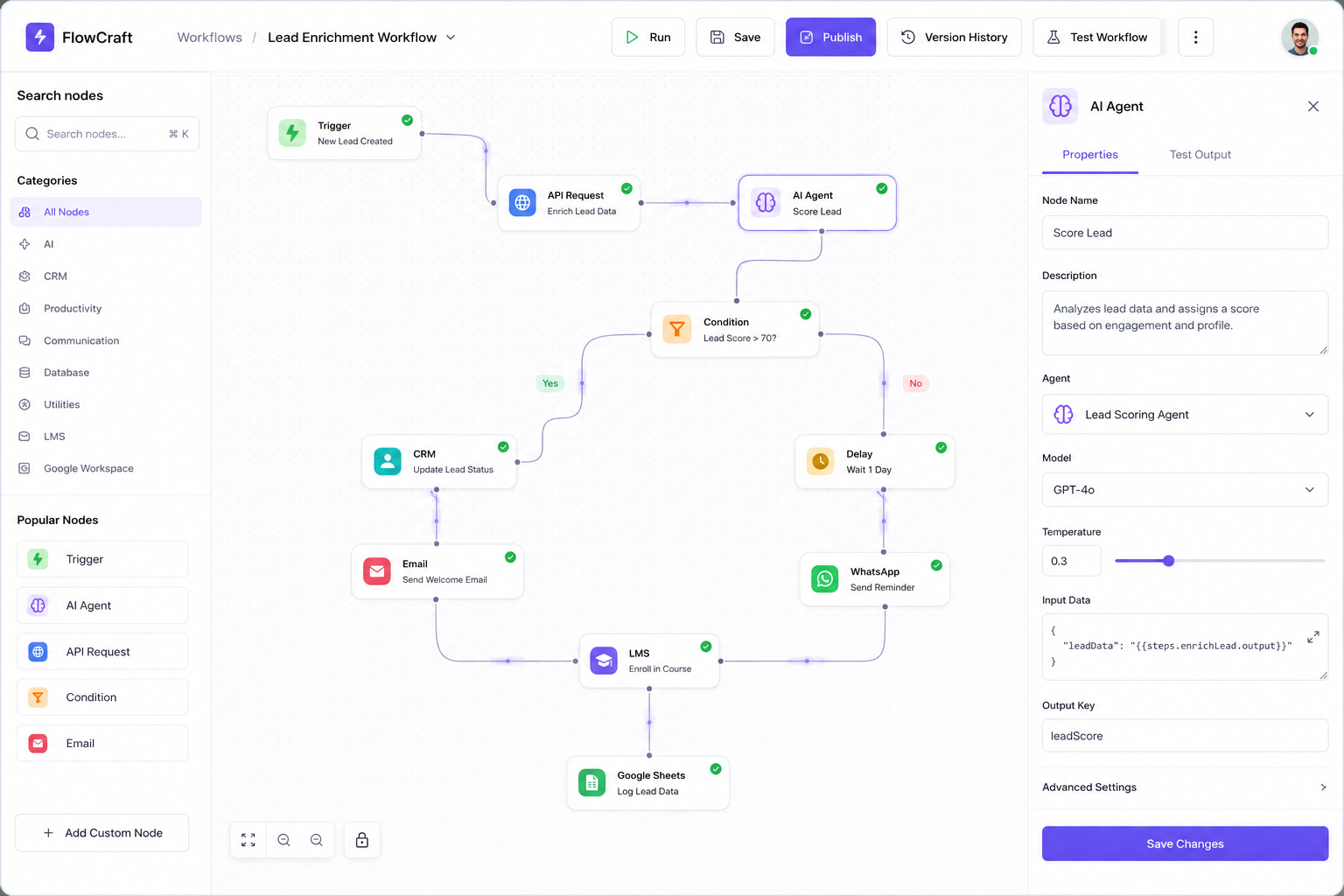
The Jarvis relied on manual report downloads, spreadsheet analysis, and email distribution across multiple teams. We designed an end-to-end automation platform that combines browser automation, AI analysis, and Power Automate to generate, analyze, and distribute performance reports without manual intervention.
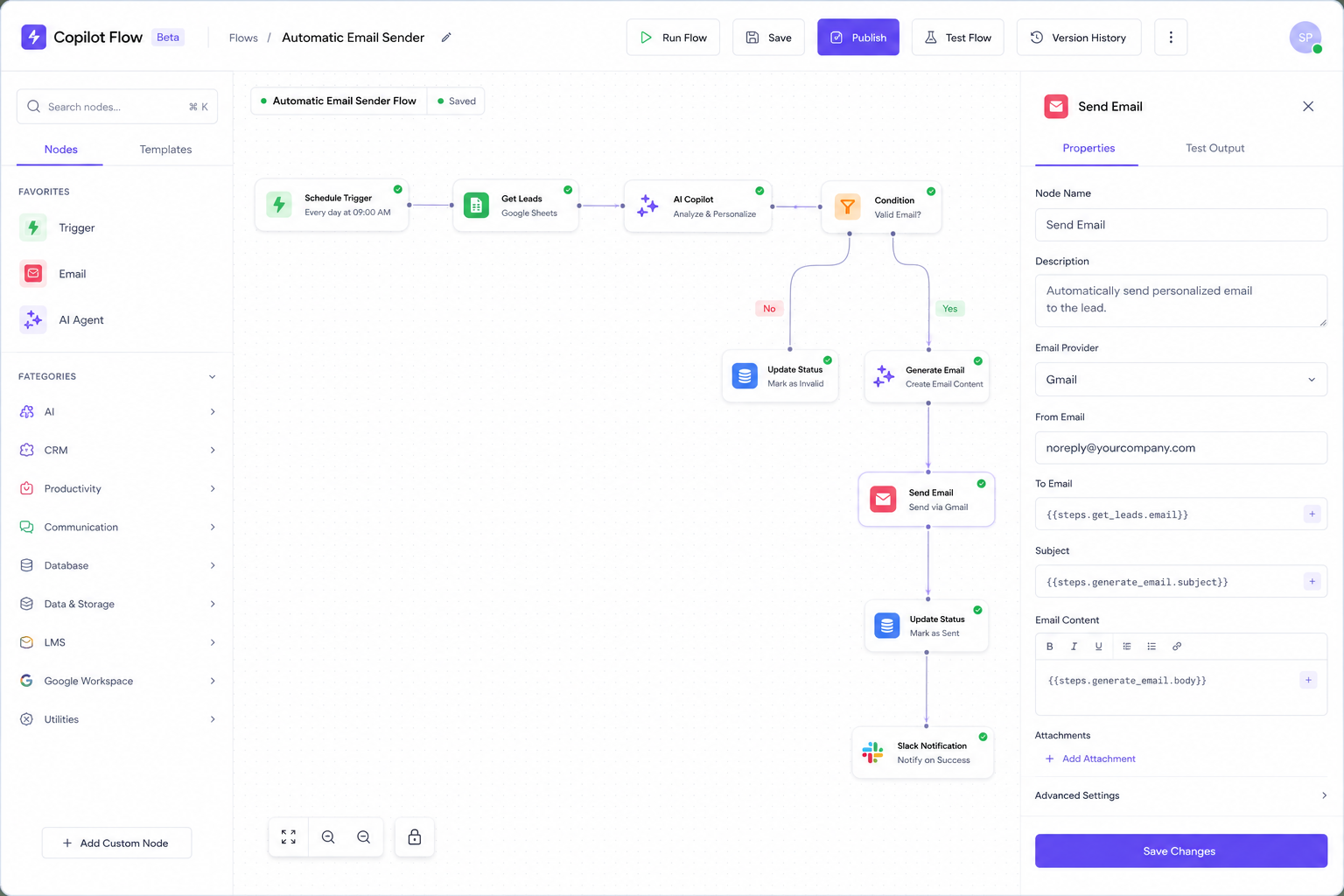
Managing grant follow-ups manually resulted in delayed communication and inconsistent tracking. We built an AI Agent using Microsoft Copilot Studio that monitors grant records, sends personalized follow-up emails, updates Excel automatically, and maintains a complete audit trail after every run.
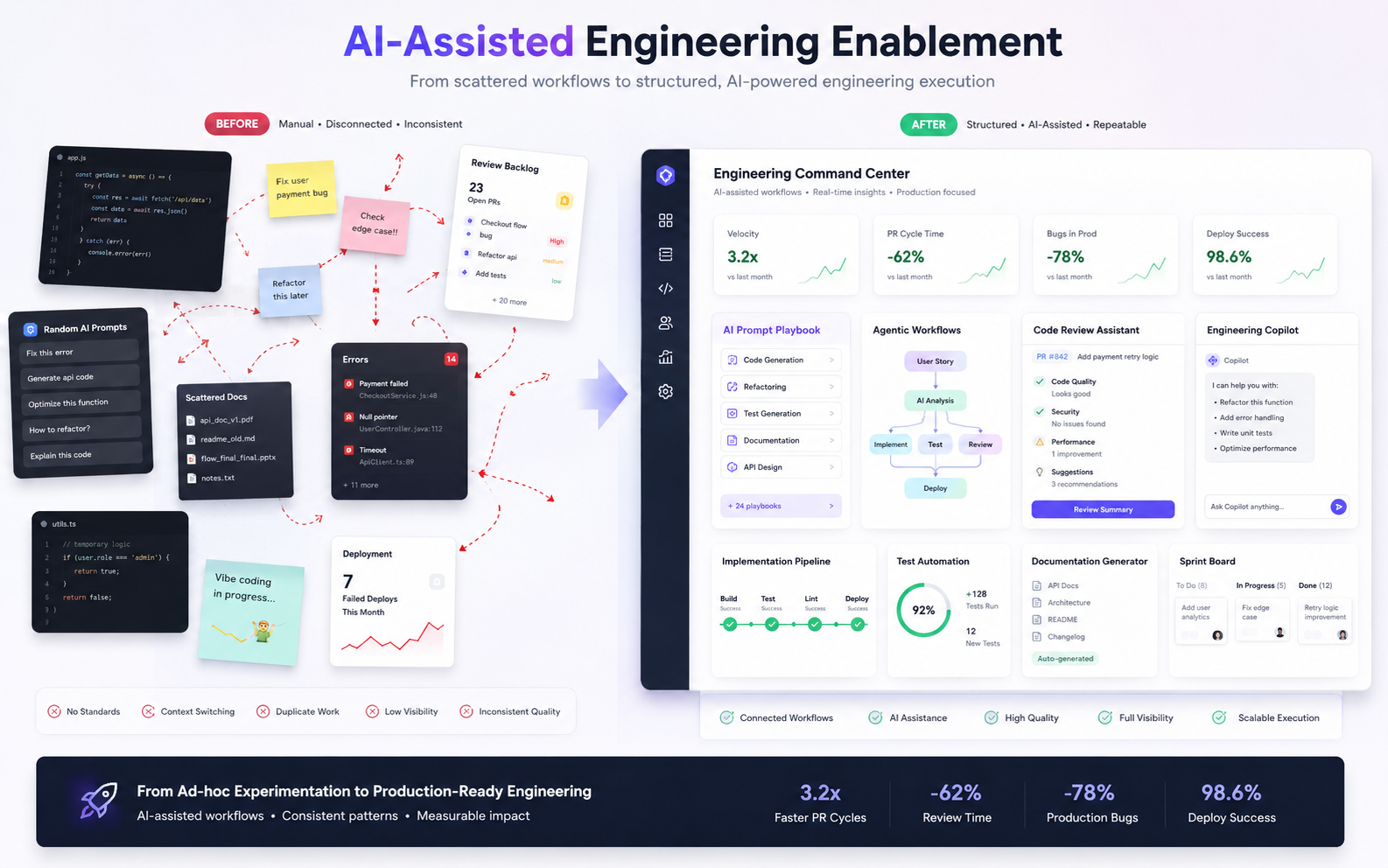
The Lions Club team was heavily reliant on manual workflows and ad-hoc vibe coding, which made development inconsistent and difficult to scale. We trained the team on structured AI-assisted engineering workflows, practical prompting, and real implementation patterns so they could move from one-off experiments to repeatable, production-focused delivery with AI embedded into day-to-day engineering work.
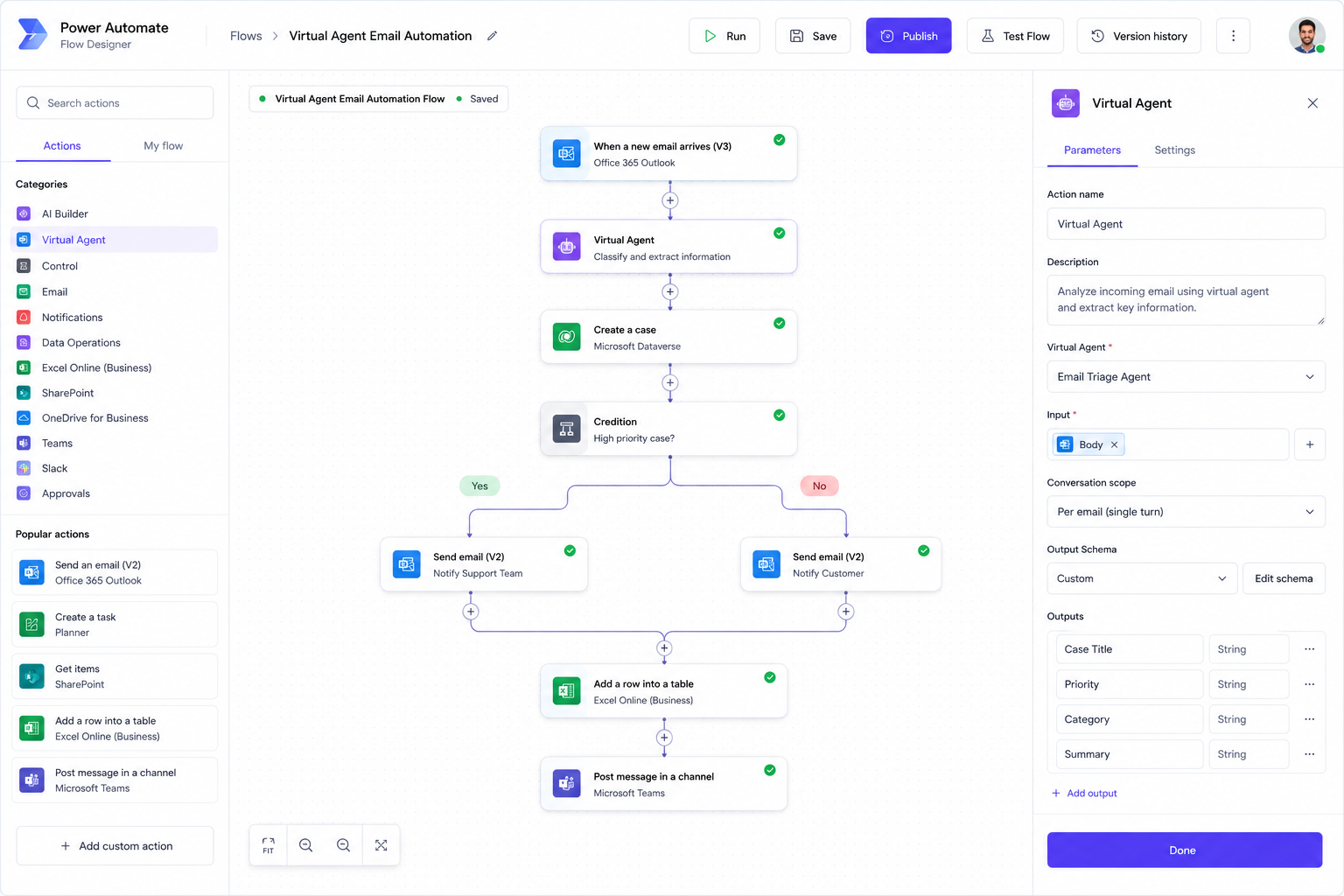
The claims team managed beneficiary notifications manually, leading to repetitive work and duplicate email risks. We implemented a Power Automate workflow that reads the claim tracker, validates eligible records, sends personalized emails, and updates processing status automatically.
No ambiguity about what happens, when. Every engagement follows three steps — and every step produces something measurable.
We measure your team's current AI and tech skills, map them to your stack, and set a clear baseline.
No lectures. Your engineers learn by building on real workflows and case studies — tasks, reviews, real output.
Post-training assessments and skill reports show exactly how far the team moved — proof your leadership can act on.
Direct quotes from engineering leaders, CTOs, and L&D heads — after the program ended, not during it.
Direct from the leaders who signed off on the program.
We were already an AI-first product, but Techpaathshala helped us go deeper — fine-tuning our models, improving signal accuracy, and building internal tools our analysts actually use daily. Their understanding of financial AI use cases made the collaboration feel like working with a genuine domain partner, not just a trainer.

Techpaathshala's AI Transformation program reshaped how our entire engineering team works. From automating repetitive dev tasks to integrating AI-assisted code reviews, our delivery speed improved by nearly 40%. The transition was smooth, hands-on, and built around our actual workflows — not generic theory.

We integrated AI into our station diagnostics and user demand forecasting with Techpaathshala's guidance. Predictive maintenance alerts have cut downtime significantly, and our app now surfaces smarter charging recommendations to users. The team understood our domain and delivered transformation that actually works in the field.
Fraud detection, loan risk scoring, customer query automation — Techpaathshala helped us deploy AI across three critical functions in one cohesive program. Compliance and accuracy stayed intact while our ops team reclaimed hours every week. For a fintech, that's not just efficiency — it's competitive edge.
Why teams keep choosing us
Share where your team is today and where you want it to be. We reply with a tailored program, format options, and clear outcomes — within 48 hours, no templates, no pressure.
Request a Custom Proposal
We've sent a 4-digit code to your mobile.
Enter it below
to proceed.
Didn't receive the code? Resend OTP
 Now
Now
Fill in your details and our team will guide you through your journey.
Our counselling team will call you within 24 hours.