Why College Won’t Prepare You for Tech’s Real Job Market Demands

“I’m not sure that college is preparing people for the jobs that they need to have today.”
Mark Zuckerberg, founder of Facebook and CEO of Meta
Most of us expect college to be the place where we learn everything needed for a successful career. But here’s the harsh reality: the majority of tech colleges aren’t preparing students for the real demands of today’s job market.
Professors, curriculum designers, and placement officers try their best, but many haven’t worked in the tech industry themselves. As a result, the gap between classroom lessons and what companies actually look for keeps growing wider. That’s why it’s essential to take charge of your learning—by connecting with industry experts, whether it’s a senior on LinkedIn coding in React or a cousin working as a Python developer. Enrolling in a trusted software training institute can be the game-changer that sets your career on the right track.
The Portfolio Gap: Dummy Projects vs. Real Proof
Most college projects end up being repetitive assignments—like an “Online Library System in Java” or a basic calculator. They may look fine in a submission, but they don’t convince recruiters you’re ready for real challenges. What does catch attention is a GitHub repository with a working e-commerce app built in React, or any project that shows you can apply skills from day one. That’s why working on real world projects at institutes like Techpaathshala makes such a difference. It turns your portfolio from “classroom exercises” into industry-ready proof of skills. Whether you’re enrolled in a full stack developer course in Mumbai or a data science course offered by Mumbai-based institutes, building real-world projects is crucial.
Outdated Syllabus: Why the Skills Don’t Match
While you might still be memorizing concepts of C and Java basics, companies are actively hiring for TypeScript, Node.js, MongoDB, Kubernetes, and cloud platforms like AWS. Technology changes every 6–12 months, but many college syllabi are updated only once a decade.
This mismatch is why so many freshers feel “underprepared” during their job hunt. The only way around it is to upskill beyond what’s taught in the classroom, ideally through specialized courses like the data analyst course in Mumbai, which is designed to be current and practical.
Soft Skills: The Silent Game-Changer
Getting hired isn’t just about knowing frameworks. It’s about communicating your skills. Write a resume that highlights the skills and projects most relevant to the job you’re applying for. Keep it updated, apply regularly, and customize it for every role so recruiters see exactly what they’re looking for. Pair that with presenting your projects confidently in interviews and practicing through mock sessions, and you’ll significantly improve your chances.
For example, saying “Skilled in C++” on your resume sounds generic. But saying “Built and deployed a full-stack app using React, Node.js, and MongoDB” instantly stands out.
What This Means for You
The job market is more competitive than ever. Generic college prep will only take you so far. You need to:
- Learn directly from people already working in the industry.
- Build a portfolio with real world projects.
- Stay current with trending tools and technologies.
- Sharpen soft skills alongside technical expertise.
Conclusion
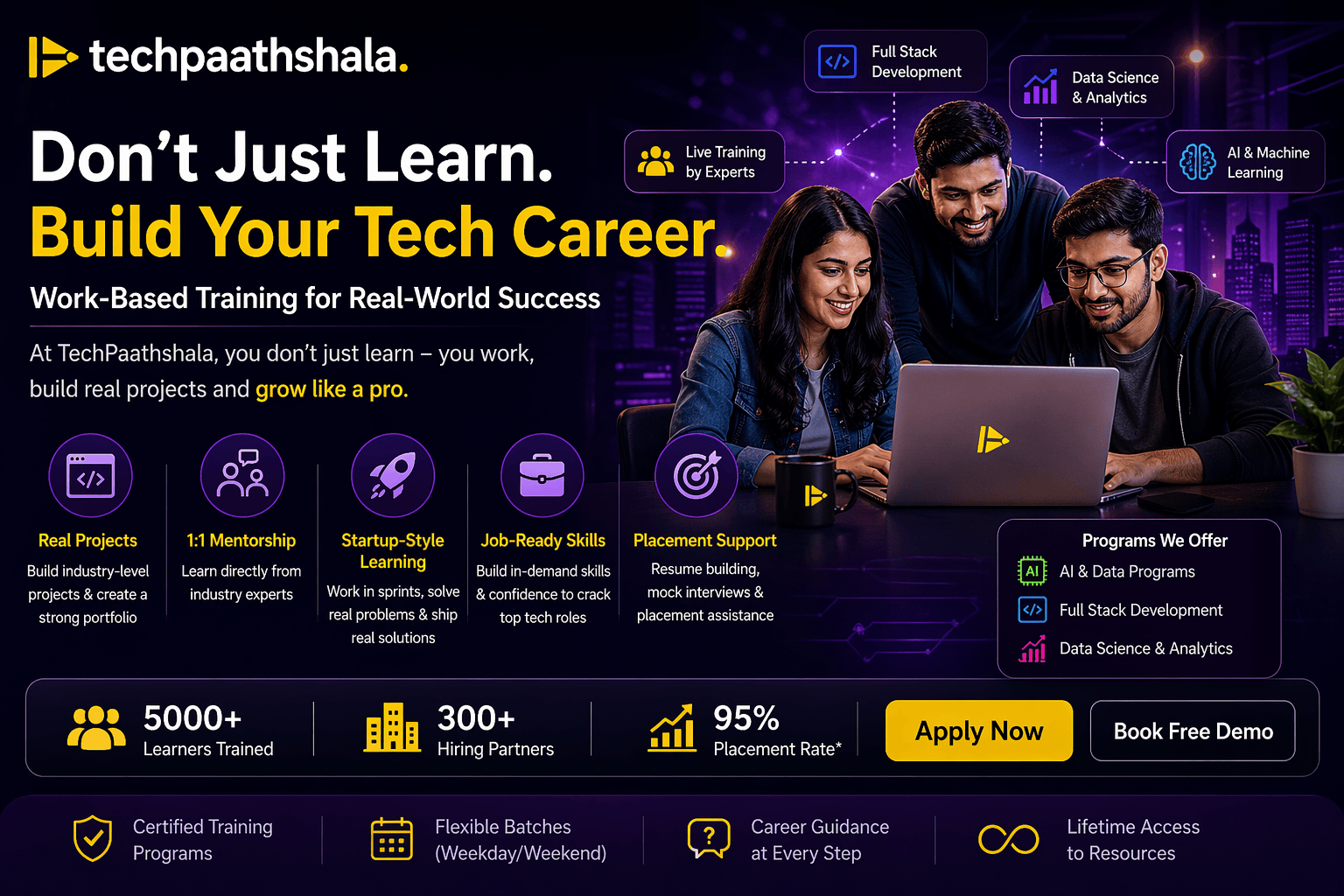
Whether you get a job right after college or choose to upskill through a course while searching, staying proactive is key. Focus on building real projects, connecting with industry experts, and sharpening your skills to stand out from the crowd. At Techpaathshala, we focus on closing the skill gap between classroom learning and real-world job demands by offering real world projects, personalized 1:1 guidance, flexible online and offline programs, and 100% placement assistance—empowering you to succeed, whichever path you choose.
For a brief highlight, check out the YouTube Short behind this blog here