What is Vibe Coding? The New Way Developers Are Using AI in 2026

Contents
- What Is Vibe Coding? A Definition Worth Keeping
- The Tools That Make Vibe Coding Real
- Cursor
- Replit Agent
- Claude (Anthropic)
- GitHub Copilot
- The "Vibe" vs. The "Logic": What AI Can Do and What Only You Can
- What AI Does Well
- What Only You Can Do
- Why Vibe Coding Is a Game Changer: Three Shifts That Matter
- Shift 1: Speed — From Idea to MVP in Hours, Not Weeks
- Shift 2: Lowering the Barrier — Building Becomes More Accessible
- Shift 3: The Evolving Skillset — What Becomes More Valuable
- Is This the End of Traditional Coding? Addressing the Fear Directly
- Practical Vibe Coding: What the New Developer Workflow Actually Looks Like
- The New Developer Identity: Architect, Director, Reviewer
- The Vibe Coding Skill Stack for 2026
- This Is the Most Exciting Time in History to Become a Developer
- Master the Tools That Are Redefining the Field
Something has quietly shifted in how the best developers in the world work — and if you haven't noticed it yet, you will very soon.
It started appearing in tweets from founders shipping entire SaaS products over a weekend. In YouTube videos of people building working apps by describing them in plain English. In Slack channels where developers started sharing not their code, but their prompts. In job descriptions that began asking for "AI-assisted development experience" the way they once asked for "experience with Git."
The shift has a name now. It is called vibe coding.
The vibe coding developers 2016 conversation began as a fringe discussion on tech Twitter and has, with remarkable speed, become one of the most consequential debates in software development — not just about tools, but about what being a developer means in 2026. Whether you are a computer science student, a seasoned engineer, or someone who has been thinking about entering tech, understanding vibe coding is no longer optional. It is the new literacy of the industry you are entering.
This post explains exactly what it is, why it matters, what it does not replace, and what you need to learn right now to stay not just relevant, but powerful.
What Is Vibe Coding? A Definition Worth Keeping
Vibe coding is the practice of building software primarily through high-level natural language instructions to an AI agent — describing what you want the application to do, rather than manually writing every line of code that makes it do that thing.
The term was coined and popularised by Andrej Karpathy, former Director of AI at Tesla and founding member of OpenAI, who described it as: "fully giving in to the vibes, embracing exponentials, and forgetting that the code even exists."
That quote is deliberately provocative — and it captures something real. In a vibe coding workflow, the developer is operating at a layer of abstraction above the syntax. Instead of writing:
app.post('/auth/login', async (req, res) => {
  try {
    const { email, password } = req.body;
    const user = await User.findOne({ email });
    if (!user) return res.status(401).json({ error: 'Invalid credentials' });
    const isValid = await bcrypt.compare(password, user.passwordHash);
    if (!isValid) return res.status(401).json({ error: 'Invalid credentials' });
    const token = jwt.sign({ userId: user._id }, process.env.JWT_SECRET, { expiresIn: '15m' });
    res.json({ token });
  } catch (err) {
    res.status(500).json({ error: 'Server error' });
  }
});
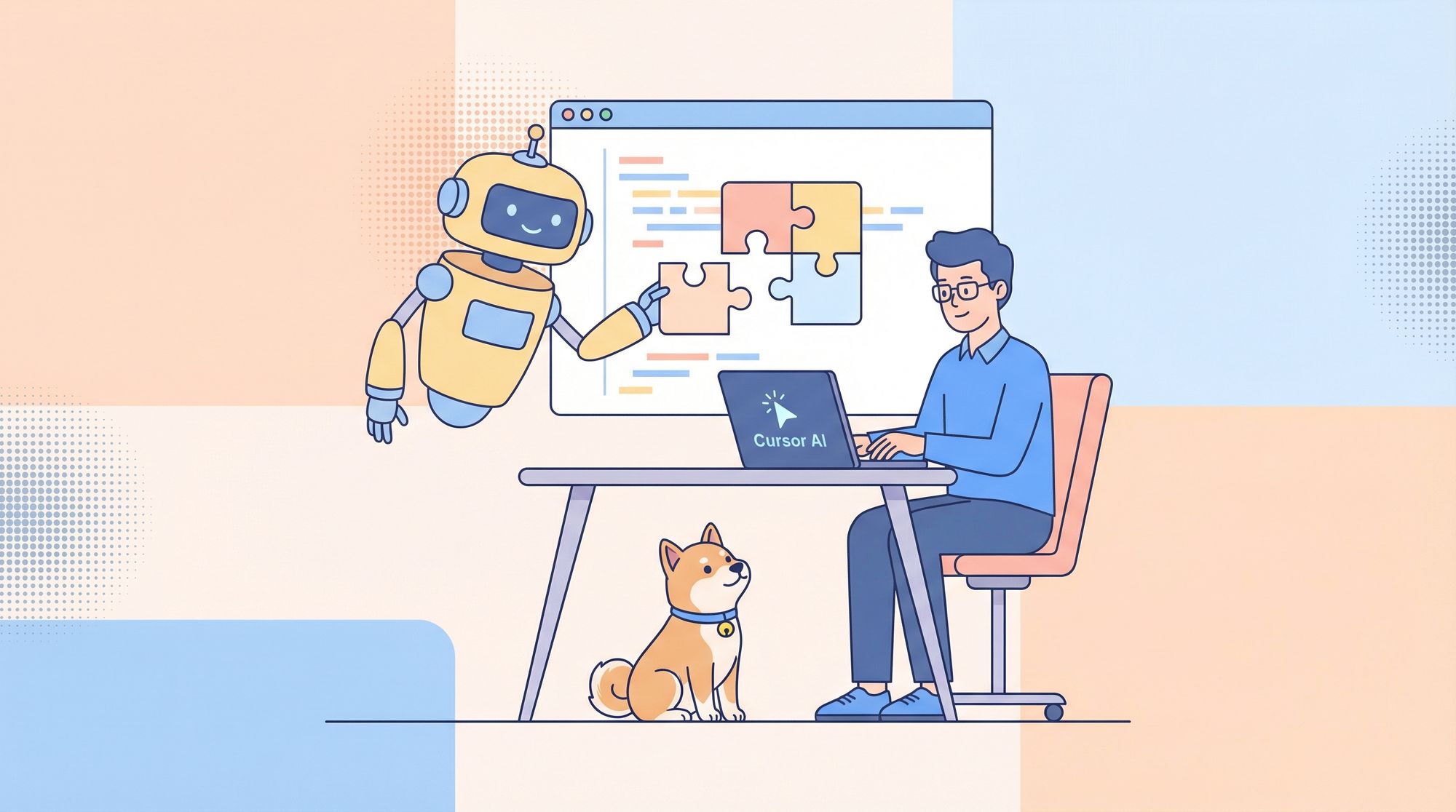
…the developer types into Cursor or Replit Agent or Claude: "Add a login endpoint that validates the user's email and password against the database, uses bcrypt for password comparison, and returns a JWT if successful. Handle invalid credentials and server errors properly."
The AI writes the code. The developer reviews it, guides it, corrects it, and integrates it into the larger system.
The developer's role does not disappear. It elevates. The question shifts from "how do I write this?" to "what should this do, and how does it fit?"
The Tools That Make Vibe Coding Real
Vibe coding is not a theoretical future — it is happening right now, today, across the developer community. Here are the tools at the centre of it:
Cursor
Cursor is an AI-native code editor built on VS Code's foundations. It knows your codebase — every file, every function, every dependency — and you can talk to it like a knowledgeable colleague. Ask it to add a feature and it will write the code in context. Ask it why a bug is happening and it will trace through the relevant logic and explain. Ask it to refactor a component and it will do so while respecting your existing patterns.
Cursor is, as of 2026, arguably the most widely adopted AI development tool among professional developers. Its "Composer" feature lets you describe a multi-file change in plain English and watch it propagate across your codebase simultaneously. For a developer who understands architecture, it is an extraordinary force multiplier.
Replit Agent
Replit Agent takes vibe coding to its furthest extreme. Describe an application — "build me a todo app with user authentication, a PostgreSQL database, and a React frontend" — and the Agent creates the project structure, writes the code, installs dependencies, and deploys it. For prototyping and learning, this capability is genuinely remarkable. For junior developers exploring ideas and for non-technical founders validating concepts, it removes the technical barrier to entry almost entirely.
Claude (Anthropic)
Claude functions as a conversational development partner — not just for writing code, but for thinking through architecture, reviewing logic, explaining complex concepts, and iterating on implementations through conversation. Developers using Claude in their workflow describe it as having a senior engineer available at all hours: one who never gets tired, never gets frustrated, and always has time to explain the reasoning behind a decision.
GitHub Copilot
The pioneer of AI-assisted coding, now deeply integrated into VS Code and JetBrains IDEs. Copilot operates at the line and function level — completing your thoughts, suggesting implementations, and generating boilerplate from comments. It is the most "invisible" of the vibe coding tools, weaving AI assistance into the natural flow of writing code rather than replacing the writing entirely.
The "Vibe" vs. The "Logic": What AI Can Do and What Only You Can
Here is the part of the vibe coding conversation that gets lost in the excitement — and it is the most important part.
AI handles the syntax. You provide the soul.
This is not a motivational slogan. It is a precise technical and architectural truth. Let's unpack what it actually means.
What AI Does Well
- Boilerplate and patterns: Authentication flows, CRUD endpoints, database schema migrations, form validation, error handling middleware, Docker configurations — these are patterns that AI has seen millions of times across the codebases it has trained on. Given a clear description, it generates them accurately and quickly.
- Syntax translation: "Write this in TypeScript instead of JavaScript" or "convert this Express route to a Next.js API route" — AI handles translation between languages and frameworks with high accuracy.
- Debugging known patterns: Common bugs — off-by-one errors, missing
awaitkeywords, incorrectuseEffectdependency arrays, SQL N+1 queries — are frequently caught and explained by AI with more speed and patience than a Stack Overflow search. - Generating test cases: Given a function, AI can enumerate the edge cases worth testing with impressive thoroughness. This is one of the highest-leverage uses of AI in a professional development workflow.
- Documentation and code explanation: Generating README files, JSDoc comments, and plain-English explanations of complex logic — AI excels here.
What Only You Can Do
- Decide what to build. No AI agent has a product vision. The decision that this application should solve this specific problem for these specific users in this specific way — that decision is entirely yours. It requires understanding people, empathy, market context, and judgment that no language model possesses.
- Design the architecture. Should this be a monolith or microservices? PostgreSQL or MongoDB? Server-side rendered or client-side? Synchronous or event-driven? These decisions have compounding consequences over months and years of development. They require a depth of understanding of trade-offs that AI can inform but cannot replace. A developer who does not understand these trade-offs will accept whatever architecture the AI defaults to — and pay for it later.
- Judge correctness and security. AI-generated code works, until it doesn't. It will occasionally generate code that appears correct but has subtle security vulnerabilities — missing input sanitisation, incorrect token expiry handling, race conditions in concurrent operations. A developer without the foundational understanding to spot these issues is flying blind. The code reviews that matter most in a vibe coding workflow are not the ones that check for typos — they are the ones that ask "is this actually secure?"
- Own the consequences. When a production system fails at 2 AM, no AI agent is on call. The developer who built it owns it. This ownership is not a burden — it is the source of the professional pride and compensation that makes a development career worth having. But ownership requires understanding.
- Communicate with humans. Translating technical constraints into business language, negotiating scope with product managers, explaining an outage to a non-technical CEO, mentoring a junior developer — none of this is automated. The human layer of software development is irreducibly human.
The vibe coding developer who will succeed in 2026 is not the one who prompts the most aggressively or outsources the most thinking. It is the one who uses AI as a high-speed implementation partner while maintaining clear ownership of the architecture, the quality, and the intent of the system they are building.
| Stage | Traditional Coding Workflow | Time Spent | Vibe Coding Workflow (AI-Assisted) | Time Spent |
|---|---|---|---|---|
| Problem Understanding | Read docs, manually break down requirements | 15% | Use AI to clarify requirements, generate approach options | 10% |
| Boilerplate Setup | Manual project setup, configs, folder structure | 20% | AI generates starter templates, configs instantly | 5% |
| Writing Code | Handwritten logic line-by-line | 30% | AI-assisted code generation + developer refinement | 25% |
| Debugging | Manual debugging, Stack Overflow searches | 15% | AI identifies issues, suggests fixes instantly | 10% |
| Testing | Manual test writing and validation | 10% | AI generates test cases, edge-case coverage | 10% |
| Optimization | Done later (if at all) | 5% | AI suggests performance improvements proactively | 10% |
| Documentation | Often skipped or rushed | 5% | Auto-generated docs, comments, and README | 10% |
Why Vibe Coding Is a Game Changer: Three Shifts That Matter
Shift 1: Speed — From Idea to MVP in Hours, Not Weeks
This is the most immediately tangible benefit of vibe coding, and the one that is most visibly reshaping how startups, agencies, and product teams operate in 2026.
The traditional path from a validated product idea to a working MVP involved: a frontend developer, a backend developer, possibly a designer, anywhere from 4 to 12 weeks, and significant budget. For a solo developer with an idea, the time investment was the primary barrier — not the knowledge, but the sheer volume of routine work between the concept and the demonstration.
Vibe coding compresses this ruthlessly. A developer who understands architecture, databases, and API design can now delegate the mechanical production of that architecture to an AI agent and operate primarily at the level of directing, reviewing, and refining. The parts of development that required hours — writing the authentication boilerplate, setting up the database schema, configuring deployment pipelines — now require minutes.
The real-world examples are not hypothetical. Developers are shipping functional SaaS products in weekend hackathons. Founders with limited technical backgrounds are building and deploying internal tools without a development team. Engineers at product companies are delivering features in days that would previously have taken sprints. The speed differential is not incremental — it is categorical.
For India's startup ecosystem, and Mumbai's Fintech and SaaS market in particular, this has enormous implications. The cost of experimentation drops. The speed of iteration increases. The companies that learn to operate in this new cadence will build a competitive advantage over those still working in the pre-AI development pace.
Shift 2: Lowering the Barrier — Building Becomes More Accessible
Vibe coding is, in some ways, the most significant democratisation of software development since the invention of high-level programming languages themselves.
For a professional from a non-technical background — an operations manager who understands the workflow problem they want to solve, a finance professional who knows exactly what their team's reporting tool is missing, a logistics coordinator who can describe the tracking system they wish existed — vibe coding dramatically reduces the translation cost between domain knowledge and working software.
This does not mean anyone with a laptop and a Claude subscription can replace a professional developer. The nuance is important: vibe coding lowers the barrier to starting and to prototyping, not necessarily to shipping production-quality software at scale. The gap between a functional demo and a secure, maintainable, production-ready application is still significant — and closing that gap still requires genuine technical understanding.
But the first step — turning an idea into something you can click through, something you can show an investor or a team, something that proves the concept is real — has never been more accessible. And for Mumbai's growing community of non-technical professionals who are curious about building, this accessibility is a genuine invitation.
Shift 3: The Evolving Skillset — What Becomes More Valuable
The most consequential shift that vibe coding produces is in the value hierarchy of developer skills. Some skills that were previously essential are being partially automated. Others are becoming more valuable than ever before.
Decreasing in individual demand (but not disappearing):
- Memorising framework APIs and syntax
- Writing boilerplate configuration code
- Manual debugging of common error patterns
- Routine test case generation
Increasing in value — dramatically:
Prompt Engineering. The ability to communicate with an AI development tool precisely, contextually, and iteratively. A developer who can describe a complex feature requirement clearly — specifying the inputs, the outputs, the edge cases, the constraints, and the integration context — gets significantly better results from AI tools than one who types vague instructions and accepts the first output. This is a skill, and like all skills, it is developed through deliberate practice.
Systems Thinking. The ability to see a software application as a system of interacting components — each with responsibilities, dependencies, and failure modes — and to make architectural decisions that maintain that system's integrity as it grows. AI can build a component if you tell it what the component should do and how it fits into the larger system. It cannot see the system itself. Only you can.
Code Review Judgment. The ability to read AI-generated code critically — not just for correctness but for security, maintainability, and fitness for purpose. This skill requires solid foundational technical knowledge. You cannot review effectively what you do not understand. The developers who are most productive with vibe coding tools are, almost without exception, those with strong enough foundations to know when to trust the AI's output and when to question it.
Domain Expertise. Deep knowledge of a specific problem domain — Fintech, healthcare, logistics, e-commerce — is more valuable than ever in a vibe coding world, because it is the one input that AI cannot generate. A developer who understands payment reconciliation, or insurance underwriting logic, or supply chain exception handling, can direct an AI agent to build solutions that a generalist developer would not even know to consider.
Is This the End of Traditional Coding? Addressing the Fear Directly
Let's name the anxiety that is sitting under this entire conversation: Will AI replace developers?
The short answer is: no, not in any timeframe that should shape your career decisions today. The longer answer is more interesting.
Every previous wave of development tooling has been greeted with some version of this fear. When compilers replaced assembly language, people asked whether programmers would be needed. When high-level frameworks replaced manual HTML table layouts, people asked whether frontend developers were done. When no-code tools emerged, people asked whether developers would be automated out of existence. Each time, the answer was the same: the tools raised the floor, but they also raised the ceiling. The demand for people who could think about software — who could architect it, own it, and evolve it — did not decrease. It increased, because the tools made software applicable to more problems and more businesses than before.
Vibe coding is the same dynamic at a higher level of abstraction. It raises the floor dramatically: people who previously couldn't build software can now build working prototypes. But it also raises the ceiling: developers who understand systems, architecture, security, and domain logic can now build things that previously required teams of five to ten people. The leverage that a genuinely skilled developer has in a vibe coding world is not lower than in the pre-AI world. It is significantly higher.
The developers who have the most to worry about are not the ones who understand their craft deeply. They are the ones who have been practicing a craft defined by the manual production of code that follows known patterns — a craft that AI now performs adequately. For those developers, the question is not "will I be replaced" but "what layer will I move to?" And the answer is: upward. Into architecture. Into product thinking. Into the layer where human judgment and domain knowledge are irreplaceable.
For a developer entering the field now, the strategic implication is clear: learn to code well enough to understand what the AI is producing, and direct it with the authority of someone who genuinely understands the system. Do not become so dependent on AI tools that you lose the ability to evaluate their output critically. The AI is a powerful collaborator. You are the engineer.
Practical Vibe Coding: What the New Developer Workflow Actually Looks Like
Understanding vibe coding conceptually is useful. Seeing what it looks like in practice is more useful still.
Here is a representative development session in a vibe coding workflow for a developer building a new feature — a "User Subscription Tier" system for a SaaS application:
Step 1 — Architecture conversation (5–10 minutes): Before writing a single line of code, the developer talks through the architecture with their AI tool. "I need to add three subscription tiers — Free, Pro, and Enterprise. Each tier has different feature limits stored in the database. Users can upgrade; downgrades take effect at the end of the billing cycle. I'm using Stripe for payments, PostgreSQL for the database, and Next.js with a Node.js API." This conversation surfaces questions the developer needs to answer: How will tier limits be enforced at the API level? What happens to user data if they downgrade? How do we handle Stripe webhook failures?
Step 2 — Schema and migration generation: The developer describes the database changes needed. Cursor generates the PostgreSQL migration file, the Prisma schema updates, and the seed data for the three tiers. The developer reviews it, catches a missing index on the user_id column, and asks for a correction.
Step 3 — API endpoint generation: "Write the upgrade endpoint. It should charge the user's card via Stripe, update their tier in the database only after a successful charge, and emit a user.upgraded event to our event bus." Cursor generates the endpoint. The developer reviews the error handling — catches that a Stripe charge failure isn't returning a user-friendly error message — and iterates.
Step 4 — Webhook handler: "Write the Stripe webhook handler for customer.subscription.updated and customer.subscription.deleted events. Update the user's tier accordingly. Make sure the webhook signature is verified before processing." This is generated, reviewed, and the developer notes that the signature verification key is hardcoded — they ask for it to be moved to an environment variable.
Step 5 — Frontend components: "Add a Subscription Settings page to the user dashboard. It should show the current tier, usage against the tier limits (displayed as progress bars), an upgrade button if they're on Free or Pro, and a billing history table fetched from the API." Generated, reviewed, styled with Tailwind.
Step 6 — Tests: "Generate integration tests for the upgrade flow — successful upgrade, failed Stripe charge, duplicate upgrade attempt, and an attempt to upgrade to a lower tier." Generated, reviewed, run.
Total time for a production-quality feature: 4–6 hours for a developer with the architectural understanding to direct this workflow. Previously: 2–3 days minimum.
This is vibe coding in practice. Not "type a prompt, accept the output." A continuous conversation between a developer with a clear vision and an AI with the ability to execute that vision at speed — with the developer's judgment applied at every step.
The New Developer Identity: Architect, Director, Reviewer
If vibe coding is the new workflow, then the new developer identity is not the person who types the fastest or memorises the most APIs. It is the person who:
- Thinks clearly about systems — who can decompose a complex application into its component parts, understand how they interact, and design those interactions to be secure, maintainable, and scalable.
- Communicates precisely — who can describe what they want with enough specificity and context that an AI tool can execute it accurately, and who can identify when the execution has drifted from the intent.
- Reviews critically — who reads AI-generated code with the same rigour a senior developer applies to a junior's pull request, asking: is this correct? Is this secure? Is this maintainable? Would this hold up under production load?
- Owns the system — who understands enough about the entire stack to diagnose a 2 AM production incident, trace a subtle bug across multiple services, and explain the system's behaviour to a non-technical stakeholder.
- Learns continuously — because the tools are evolving faster than any other technology in the developer ecosystem, and the developers who stay current with the tool landscape will have capabilities that those who don't will not.
This identity is not a retreat from technical depth. It is a different expression of it — one that is arguably more aligned with how the best senior developers have always worked, and one that is now accessible earlier in a developer's career because the implementation layer is increasingly automated.
The Vibe Coding Skill Stack for 2026
If you want to be a vibe coding-era developer, here are the capabilities worth developing, ordered by priority:
Foundation (still non-negotiable):
- Strong JavaScript or Java fundamentals — you must understand what the AI is producing
- React and a backend framework (Node.js/Express or Spring Boot) — the tools are stack-aware; being fluent in the stack makes your AI collaboration more effective
- SQL and database design — AI generates schemas and queries; you need to evaluate them
- Git and version control — the workflow layer that ties everything together
Vibe Coding Layer (new and increasingly essential):
- Cursor fluency — not just installing it, but developing a prompt vocabulary for common development tasks (authentication, API design, database migration, deployment configuration)
- Effective context-setting — learning to open the right files, write clear
CONTEXT:preambles, and frame requests with enough specificity to get accurate, first-attempt output - AI output review discipline — developing the habit of reading every generated code block with genuine critical attention before accepting it
- Iterative prompting — knowing how to respond when the AI's first output is wrong or incomplete: not starting over, but refining the prompt with the specific correction needed
- GitHub Copilot as a typing accelerator — using inline suggestions for the parts of development where the intent is clear and the pattern is known
Emerging High-Value Skills:
- Prompt engineering for architecture — using AI tools not just for code generation but for architectural discussion, trade-off analysis, and design documentation
- AI-assisted testing — using Claude or Copilot to generate test suites and edge case coverage systematically
- Workflow automation — using AI agents to automate repetitive development tasks (documentation generation, changelog creation, boilerplate setup)
This Is the Most Exciting Time in History to Become a Developer
Here is the perspective that the fear-driven "will AI replace us?" conversation obscures: for developers who embrace vibe coding thoughtfully, 2026 is the most powerful time in history to build things.
The ratio of creative to mechanical work in software development is shifting permanently in favour of the creative. The ideas, the architecture, the product judgment, the domain expertise — the parts of the job that require human intelligence, human empathy, and human experience — are now a larger fraction of the total work than they have ever been. The mechanical production layer is being handled, increasingly, by machines that are excellent at it.
For a developer who loves building things — who got into this field because they wanted to create software that changes how people work and live — this is not a threat. It is a gift.
The vibe coding era is not the end of the developer. It is the developer's promotion.
Master the Tools That Are Redefining the Field
Understanding vibe coding is the first step. Developing genuine fluency with the tools — Cursor, GitHub Copilot, Claude, Replit Agent — is what transforms that understanding into a career advantage.
TechPaathshala's AI-Assisted Development Workshop is a hands-on, intensive program designed to take you from "aware of AI coding tools" to "genuinely productive with them" — in the context of building real Full Stack projects.
In the workshop, you will:
Build a complete application using a vibe coding workflow. Not follow a tutorial — build a real project, from architectural planning to deployment, using Cursor and Claude as your development partners. You will write prompts, review outputs, iterate, and ship.
Develop a prompt vocabulary for Full Stack development. We have catalogued the most effective prompting patterns for authentication flows, REST API design, database schema generation, React component architecture, and deployment configuration. You will leave with a personal prompt library that makes you immediately more productive.
Practice AI output review. Exercises specifically designed to train the critical-reading habit — spotting the security gaps, the architectural mismatches, and the edge cases that AI tools routinely miss. This is the skill that separates developers who use AI safely from those who will eventually ship a problem they didn't see.
Understand where the tools are heading. A structured look at the AI development tool landscape — what Cursor, GitHub Copilot, Replit Agent, and Claude are capable of today, where they are explicitly limited, and how those limitations are likely to evolve over the next 12–18 months. You will leave with a clear-eyed view of the landscape, not hype.
Leave with a deployed project and a vibe coding portfolio piece. Because in 2026, showing that you can use AI tools effectively is a portfolio signal — just as showing you can use Git was a portfolio signal in 2015.
The developers who will define the next decade of Mumbai's tech industry are the ones who master this toolset now, while fluency is still a differentiator. The window does not stay open forever.
👉 Register for TechPaathshala's AI-Assisted Development Workshop — and learn to build at the speed that 2026 demands.
TechPaathshala is a Mumbai-based Full Stack developer training platform. Our curriculum evolves with the industry — because the developers we train should arrive at their first job ready for the tools their teams are actually using, not the tools that were standard five years ago.