How to Build a Full Stack Portfolio That Gets You Hired in Mumbai
Contents
- Why GitHub Has Replaced the Resume (For Developers Who Want to Win)
- What Mumbai Interviewers Are Actually Looking For
- The 3-Project Rule: Depth Over Breadth
- Project 1: The E-Commerce or SaaS Application
- Project 2: The Real-Time Application
- Project 3: The "Mumbai Problem Solver"
- The "Recruiter-Ready" Checklist: The Finishing Work That 90% Skip
- The README: The Paperwork of Code
- Live Deployment: If It's Not Online, It Doesn't Exist
- The "Challenges Faced" Section: Your Interview Differentiator
- Code Quality Signals Worth Caring About
- Networking for Mumbaikars: Getting Your Portfolio Seen
- Show Up Where Mumbai's Tech Builders Meet
- Optimising Your LinkedIn for Mumbai-Based HRs
- Quick-Reference Portfolio Checklist
- The Hard Truth About Portfolios (And the One Thing That Accelerates Everything)
- Get Your Portfolio Reviewed by a Mumbai Industry Mentor
Here's a truth that Mumbai's best tech recruiters will tell you, but most job portals won't: your GitHub profile matters more than your resume in 2025.
A resume tells a hiring manager what you claim to know. A portfolio proves what you can actually build. And in a city where thousands of freshers and career-switchers flood Naukri and LinkedIn every month — all listing the same "Proficient in React, Node.js, MongoDB" — the developers who land Full Stack Developer jobs in Mumbai are the ones who show up with something real. Something deployed, documented, and alive on the internet.
This is the core reality of the full stack portfolio Mumbai job market: Mumbai's tech hiring culture has quietly shifted from credential-first to builder-first. The Fintech giants in BKC, the SaaS startups in Powai, and the product companies scattered across Andheri's office towers are no longer impressed by certificates. They want to see code. They want to click a live link. They want to read a README that proves you understand why you built something, not just what you built.
The good news? Most of your competitors haven't figured this out yet. This guide will show you exactly how to build a full stack portfolio that stands out in Mumbai's most competitive hiring corridors — and what it needs to contain to convert a recruiter's attention into an interview call.
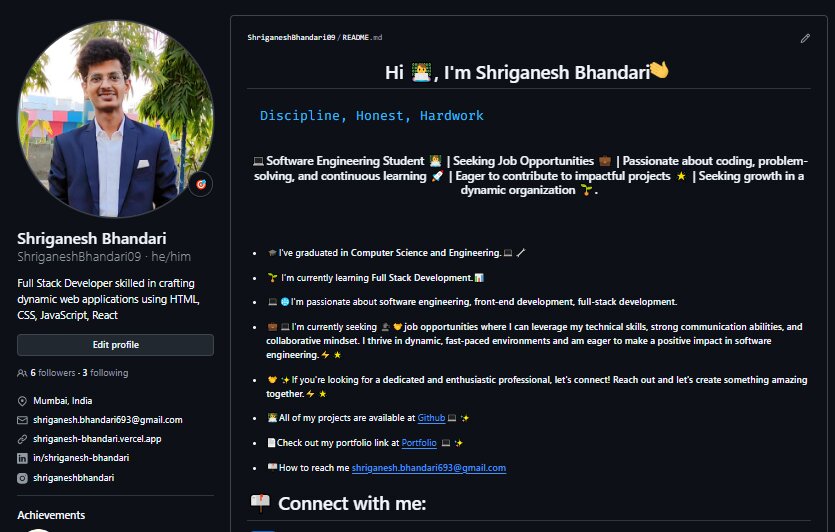
Why GitHub Has Replaced the Resume (For Developers Who Want to Win)
Think about what a resume actually is: a formatted Word document where you describe yourself in third person, list technologies you've "worked with," and hope the recruiter believes you.
Now think about what GitHub offers a Mumbai tech recruiter in 2025:
- Commit history that shows whether you code regularly or only when you have to
- Repository structure that reveals how you organise and think about software
- README files that demonstrate whether you can communicate technical decisions clearly
- Deployed links that let anyone verify your work is real, running, and polished
- Code quality that shows, without any filter or exaggeration, exactly how you write
Recruiters at companies like Razorpay, Nykaa, HDFC Securities, and mid-size Andheri startups have openly said they spend more time on a candidate's GitHub than on their resume. One recruiter from a Powai-based SaaS firm put it bluntly: "If there's nothing on your GitHub, I assume there's nothing in your head either."
That's not harsh — that's the market you're entering. The full stack portfolio Mumbai hiring pipeline has evolved to where a strong GitHub profile with three excellent projects will get you interviews that five years of "experience" won't.
What Mumbai Interviewers Are Actually Looking For
Before you build a single project, understand what Mumbai's technical interviewers want to see when they review your portfolio:
- Problem-solving narrative: Why did you build this? What problem does it solve?
- Technical depth: Did you make architectural decisions, or just follow a YouTube tutorial?
- Production thinking: Is this deployed? Does it handle errors gracefully?
- Communication ability: Can you explain your work clearly in writing and in person?
- Mumbai or India context: Bonus points if your project solves a problem they recognise from their own city
The rest of this guide is structured around satisfying every one of these expectations.
The 3-Project Rule: Depth Over Breadth
The biggest portfolio mistake aspiring developers in Mumbai make is the same mistake: ten tiny projects that all look the same.
A folder full of to-do apps, weather widgets, and calculator clones tells a recruiter nothing meaningful about your abilities. What they signal, unintentionally, is that you've been dabbling — moving from tutorial to tutorial without ever going deep enough to encounter real problems.
The 3-Project Rule flips this entirely. Three carefully chosen, deeply built, fully deployed projects will do more for your career than thirty half-finished ones. Here's exactly what those three projects should be.
Project 1: The E-Commerce or SaaS Application
The Signal It Sends: You can build the backbone of a real product — the kind of application companies actually sell.
What to Build: A full-featured web application with user accounts, a product or service catalogue, and a working payment flow. This could be:
- A multi-vendor e-commerce store with product listings, cart, and Razorpay/Stripe integration
- A subscription-based SaaS tool (expense tracker, project manager, invoice generator)
- A B2B service booking platform — salons, tutors, or repair services with appointment management
Core Technical Requirements:
- Authentication: Full user registration and login with JWT or session-based auth. Implement password hashing (bcrypt), protected routes on both frontend and backend, and role-based access (admin vs. customer)
- CRUD Operations: Complete create, read, update, and delete flows for the core entity (products, services, invoices). This is the minimum table stakes for any Full Stack role interview
- Payment Integration: Implement Razorpay (for Indian market authenticity) or Stripe. Even a sandbox integration demonstrates commercial thinking — most portfolio projects never include this, and it immediately differentiates yours
- Database Design: Use PostgreSQL or MongoDB with a sensible schema. Include relationships (users have orders, orders have items) and show you understand data modelling
- Tech Stack Suggestion: Next.js + Node.js/Express + PostgreSQL + Razorpay + Deployed on Vercel (frontend) + Railway or Render (backend)
Why Mumbai Interviewers Love This Project: Every Fintech company, startup, and e-commerce firm in Mumbai's ecosystem is essentially a variation of this architecture. Authentication, CRUD, and payments are the three things interviewers test first — and this project proves you've built all three in a cohesive, production-like environment.
Project 2: The Real-Time Application
The Signal It Sends: You understand asynchronous, event-driven programming — the technical foundation of modern applications.
What to Build: An application where data updates in real time without the user refreshing the page. The two most accessible options are:
- A Group Chat Application: Multiple users, multiple rooms, real-time message delivery, online presence indicators (who's currently active)
- A Live Analytics Dashboard: Real-time data visualisation — think a live stock price tracker, a live cricket score board, or a real-time sales dashboard with auto-updating charts
Core Technical Requirements:
- WebSockets with Socket.io: Implement bidirectional, event-driven communication between the client and server. For a chat app: room management, message broadcasting, typing indicators, and connection/disconnection events
- State Management: Real-time apps require careful frontend state management — use React's
useReduceror Zustand to manage live updates cleanly - Persistence Layer: Messages or events should be stored in a database (MongoDB works well here for its document flexibility) so conversation history survives a page refresh
- User Presence: Track and display which users are online — a small detail that signals genuine understanding of WebSocket connection lifecycle
- Tech Stack Suggestion: React + Node.js + Socket.io + MongoDB + Deployed on Render (backend handles persistent WebSocket connections better than serverless platforms)
Going Further (Makes Your Project Stand Out): Add message read receipts, file sharing via Cloudinary, or notification badges on unread messages. These features are what separate a "tutorial clone" from a "portfolio-worthy project."
Why Mumbai Interviewers Love This Project: Real-time applications come up in interviews at almost every product company. Understanding the difference between HTTP polling, Server-Sent Events, and WebSockets — and being able to explain your implementation choice — marks you as a developer who thinks about architecture, not just features.
Project 3: The "Mumbai Problem Solver"
The Signal It Sends: You don't just code — you observe the world around you, identify friction, and build solutions. This is the project that makes interviewers lean forward.
What to Build: An application that solves a recognisable, real problem specific to Mumbai or Maharashtra. This category of project generates the most memorable interview conversations — because every interviewer in Mumbai has personally experienced the problem you're solving.
Here are three fully fleshed-out ideas:
Option A: Mumbai Local Train Crowd Tracker A web app (and optionally a PWA) where commuters can report crowd levels at specific stations and trains in real time. Users select a station, report the crowd as "empty / moderate / packed," and the app aggregates live crowd data shown on a station map. Features: geolocation for nearby station detection, crowd history graphs by time of day, a "Best Time to Travel" recommendation engine.
Technical highlight: Real-time data aggregation, PWA for offline capability, and map integration (Leaflet.js or Google Maps API).
Option B: Tiffin Service Management Platform A full-stack platform for Mumbai's thousands of home-based tiffin providers. A tiffin supplier can manage their menu, take daily orders, mark deliveries as done, and accept UPI payments via Razorpay. Customers in their area can browse suppliers, subscribe to weekly plans, and track today's delivery status.
Technical highlight: Multi-role authentication (supplier vs. customer), subscription billing logic, geolocation-based supplier search, and SMS notifications via Twilio or Fast2SMS.
Option C: BKC Office Parking Finder A parking availability tracker for BKC's notoriously difficult parking situation. Users can mark parking spots as available or occupied; the app shows a real-time map of available spots. Add features like parking spot reservations, hourly pricing, and a walking distance estimator from the nearest metro station.
Technical highlight: Real-time map updates (WebSockets + Leaflet.js), geofencing logic, and a simple reservation and payment system.
Why This Project Category Is Your Secret Weapon: Generic projects get polite nods. A Mumbai-specific project gets a genuine reaction. When a BKC-based recruiter sees a BKC Parking Finder, or a Powai startup founder sees a Local Train Tracker, there's an immediate emotional connection. They understand the problem. They've lived it. That authentic recognition transforms a portfolio review into a real conversation — which is exactly where job offers come from.
The "Recruiter-Ready" Checklist: The Finishing Work That 90% Skip
Building the project is only 70% of the work. The remaining 30% — the part most aspiring developers skip — is what makes the difference between a project that impresses and one that gets ignored. Work through this checklist for every project in your portfolio.
The README: The Paperwork of Code
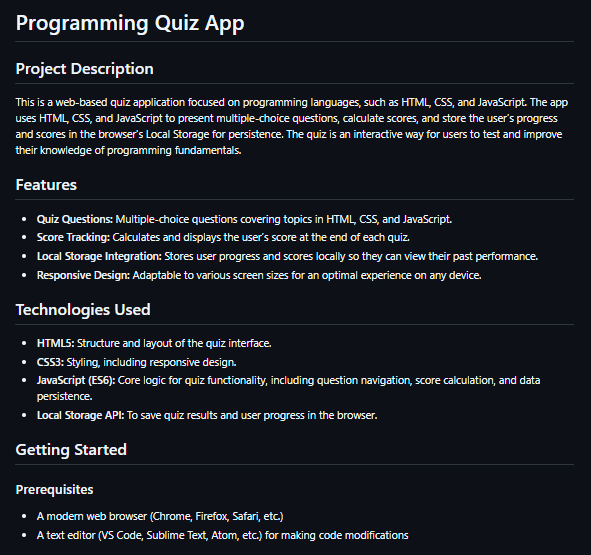
Your README is the first thing a recruiter reads when they open your GitHub repository. A bad README says "this developer doesn't care about communication." A great README says "this developer thinks like a professional."
What a great README must include:
1. A Project Title and One-Line Description Clear, jargon-free. What does this app do? Who is it for?
2. A Live Demo Link Right at the top — a clickable link to your deployed application. If there's no live link, many recruiters won't go further.
3. A Screenshot or GIF of the App in Action Visual proof that the app looks real and works. Use a tool like Kap (macOS) or ScreenToGif (Windows) to capture a 10-second walkthrough.
4. Tech Stack Used List every major technology with a one-line explanation of why you chose it. "I used PostgreSQL because the data is relational and I needed ACID compliance for the payment records" is infinitely better than just "PostgreSQL."
5. Features List Bullet points covering the main functionality. Keep it concise — 6 to 10 items.
6. Setup and Installation Instructions How does someone clone and run this locally? Every serious developer portfolio includes this. It shows you've thought about others reading your code.
7. Environment Variables Guide List every required .env variable (without the actual values, obviously) and what each one does. This signals production awareness.
8. "Challenges Faced" Section (The most important section — covered in detail below)
Live Deployment: If It's Not Online, It Doesn't Exist
A project that only runs on your laptop is a project that only you can see. Every portfolio project must be deployed and accessible via a public URL before you share it with a single recruiter.
Deployment recommendations by project type:
- Next.js frontend: Vercel — free tier, instant deployments, automatic HTTPS, and custom domain support. The standard for any React/Next.js project
- Node.js/Express backend: Render or Railway — both offer free tiers suitable for portfolio projects, with automatic deploys from GitHub
- Full stack apps (monorepo): Vercel (frontend) + Render (backend) + Supabase or Railway (database) is the most cost-effective and interview-impressive setup in 2025
- Apps with WebSockets: Render's free tier supports persistent connections; Vercel's serverless functions do not — this architectural distinction is worth mentioning in your README and in interviews
- For a more enterprise-flavoured setup: AWS EC2 (t2.micro free tier) for the backend + RDS (PostgreSQL) for the database. Setting this up demonstrates cloud awareness that enterprise Mumbai employers notice
Pro Tip: Add a "demo" tag or a note in your README if your free-tier backend goes to sleep after inactivity (a known issue with Render's free plan). A recruiter who clicks your live link and sees a blank screen will assume the app is broken — not sleeping. Being upfront about this shows professional communication instincts.
The "Challenges Faced" Section: Your Interview Differentiator
This is the most underestimated element of a developer portfolio — and the one that Mumbai's best technical interviewers specifically look for.
Here's why it matters: every interview for a Full Stack Developer role in Mumbai will include some version of this question: "Tell me about a technical challenge you faced and how you solved it."
Most candidates fumble this. Not because they haven't faced challenges, but because they never stopped to document and articulate them. The "Challenges Faced" section in your README forces you to do this work in advance — and the answers are right there to reference before every interview.
What to write in this section:
Be specific. Be technical. Describe the problem, the approach you initially tried, why it failed or was suboptimal, and the solution you ultimately implemented.
Weak example:
"I had some trouble with authentication but figured it out."
Strong example:
"Implementing refresh token rotation was the most complex part of this project. My initial approach stored the refresh token in
localStorage, which I later realised was vulnerable to XSS attacks. I refactored to store the refresh token in anhttpOnlycookie and the access token in memory (React state), which eliminates XSS exposure for the refresh token while keeping the access token out of storage entirely. This required restructuring my Axios interceptors to silently refresh the access token on 401 responses, which I implemented using a request queue to prevent race conditions on simultaneous failed requests."
That paragraph, written in your README, is essentially a pre-written answer to one of the most common Mumbai technical interview questions. Write two or three of these per project and you'll walk into interviews more prepared than 95% of your competition.
Code Quality Signals Worth Caring About
Recruiters and senior developers who review your code will notice these:
- Consistent formatting: Use Prettier and ESLint in every project. A codebase with consistent formatting signals professional discipline
- Meaningful commit messages: "Fixed stuff" tells a story. "feat: implement JWT refresh token rotation with httpOnly cookie storage" tells a better one. Your commit history is readable — make it reflect well on you
- Environment variables: Never commit API keys or secrets. Always use
.envfiles and add them to.gitignore. Add a.env.examplefile showing the required variables. This is a basic security practice and recruiters notice when it's absent - Component organisation: In React projects, a flat folder of 40 components is a red flag. Organise by feature or by type — show that you think about structure
- Error handling: At a minimum, your API should return meaningful error messages and your frontend should display user-friendly errors rather than blank screens or console stack traces
Networking for Mumbaikars: Getting Your Portfolio Seen
Building the portfolio is necessary. Getting it in front of the right people is what converts it into interviews. Mumbai's tech community, for all its competitiveness, is more accessible than most aspiring developers realise.
Show Up Where Mumbai's Tech Builders Meet
Mumbai has an active and growing developer community. These are the gatherings worth attending:
React Mumbai and JavaScript Mumbai Meetups: Held periodically in Andheri and BKC, these meetups draw frontend and Full Stack developers from startups, product companies, and agencies across the city. Attending — and ideally presenting a 5-minute lightning talk about one of your portfolio projects — is one of the fastest ways to get your name known in the community.
GDG Mumbai (Google Developer Groups): The Mumbai chapter holds regular events in Powai and Vile Parle, with a strong Full Stack and cloud-native focus. The attendee mix includes senior developers, engineering managers, and startup founders — the exact people who make hiring decisions.
Startup community events in Powai: IIT Bombay's ecosystem (Techfest, E-Cell events, and the Bombay Garage coworking community) hosts networking events that regularly feature Mumbai's most active startup founders and tech leads. You don't need to be an IIT student to attend many of these.
Online communities: Mumbai-specific developer groups on Discord, Telegram, and LinkedIn are active. The "Mumbai Tech Community" and "ReactJS India" Discord servers are good starting points. Share your projects there — genuine engagement and feedback from peers is how you build a developer reputation before you have a job title.
Optimising Your LinkedIn for Mumbai-Based HRs
LinkedIn is the single most-used platform by Mumbai's tech recruiters. Your profile needs to function as a second portfolio — especially since many HRs search LinkedIn before they ever visit GitHub.
Profile optimisations that matter for Mumbai's market:
- Headline: Don't write "Fresher | Looking for opportunities." Write "Full Stack Developer (React + Node.js) | Building [Your Best Project Name] | Open to Mumbai Roles." A specific headline signals confidence and makes you searchable for the right keywords
- About section: Write 3–4 sentences in first person. Mention the technologies you use, the types of problems you build for, and that you're targeting roles in Mumbai. Include the phrase "Full Stack Developer Mumbai" or "Full Stack Developer jobs in Mumbai" naturally — LinkedIn's search algorithm indexes this
- Featured section: Pin your three portfolio project links here. If your projects are deployed, pin the live links, not just the GitHub repos
- Skills section: Add React.js, Node.js, MongoDB, PostgreSQL, REST APIs, Git, and any other core technologies. Ask peers to endorse these — social proof matters in LinkedIn's algorithm
- Location: Set your location to "Mumbai, Maharashtra" explicitly, not just "India." Mumbai-specific recruiter searches filter by location
- Connection strategy: Connect with HRs at your target companies, developers at those companies, and technical recruiters who post Mumbai-specific roles. A personalised connection request note ("I'm a Full Stack developer building [X project], open to roles in Mumbai — would love to connect with fellow devs in the space") gets accepted at a far higher rate than a blank request
Quick-Reference Portfolio Checklist
Before you send your GitHub link to a single recruiter, run through this list:
| Item | Status |
|---|---|
| 3 substantial, fully built projects | ✅ / ❌ |
| All projects deployed with live links | ✅ / ❌ |
| Each project has a professional README | ✅ / ❌ |
| READMEs include "Challenges Faced" sections | ✅ / ❌ |
| No API keys or secrets committed to any repo | ✅ / ❌ |
.env.example files present in all projects | ✅ / ❌ |
| GitHub profile has a photo, bio, and location set | ✅ / ❌ |
| GitHub pinned repos show your 3 best projects | ✅ / ❌ |
| Commit history shows regular, meaningful contributions | ✅ / ❌ |
| LinkedIn headline is role + tech stack + city-specific | ✅ / ❌ |
| LinkedIn Featured section links to deployed projects | ✅ / ❌ |
| At least one Mumbai Problem Solver project in the mix | ✅ / ❌ |
If you can check every box on that list, you are more portfolio-ready than the vast majority of aspiring developers applying for Full Stack Developer jobs in Mumbai right now.
The Hard Truth About Portfolios (And the One Thing That Accelerates Everything)
Here's something most tutorials and YouTube channels won't tell you: building a great portfolio alone is slow, inefficient, and easy to get wrong.
When you're building solo, you don't know what you don't know. You might spend three weeks on a project that a recruiter would dismiss in 30 seconds because of one fixable issue — a README that isn't professional, a deployment that keeps crashing, or an architecture choice that signals inexperience. You'd have no way of knowing until it's too late.
The full stack portfolio Mumbai hiring market is competitive enough that the difference between a portfolio that gets ignored and one that generates five interview calls is often not months of extra work — it's one experienced mentor reviewing your project and telling you exactly what to fix.
Get Your Portfolio Reviewed by a Mumbai Industry Mentor
TechPaathshala's Portfolio & Placement Workshop is built for exactly this moment in your career: you've built something, you know you want to get hired in Mumbai, but you're not confident your portfolio is ready — and you don't want to waste months applying with a profile that isn't landing interviews.
Here's what the workshop delivers:
Personal Project Review: A senior developer with Mumbai hiring experience reviews each of your portfolio projects — your code, your README, your deployment, your GitHub profile — and gives you specific, actionable feedback on what to improve and what to highlight.
README and Documentation Workshop: We'll rewrite your READMEs together, including your "Challenges Faced" sections, so that your projects tell the right story to the right audience.
Mock Technical Walkthrough: Simulate the portfolio review portion of a real Mumbai tech interview. Practice walking a "recruiter" through your projects, explaining your architecture decisions, and answering the inevitable deep-dive questions.
LinkedIn Profile Audit: Walk away with a fully optimised LinkedIn profile calibrated for Mumbai's recruiter search ecosystem and tech hiring culture.
Placement Network Access: Direct connections to TechPaathshala's hiring partners across Mumbai's startup, SaaS, and Fintech ecosystem — the people who are actively hiring Full Stack developers right now.
You've done the building. Let a mentor help you make sure it gets seen.
👉 Join TechPaathshala's Portfolio & Placement Workshop — and turn your GitHub profile from a personal archive into a Mumbai job offer machine.
TechPaathshala is a Mumbai-based tech education platform specialising in Full Stack development training, portfolio coaching, and developer placement across Mumbai's most competitive tech hiring corridors.