Full Stack Developer Salary Hike – Before and After Upskilling in Mumbai
Contents
- The Salary Stagnation Reality: What's Happening to Single-Stack Roles in 2025
- Full Stack Salary Hike Mumbai: The Before and After
- Fresher and Junior Level (0–2 Years)
- Mid-Level (2–5 Years)
- Senior Level (5+ Years)
- The High-Paying Hubs: Where Mumbai Pays the Full Stack Premium
- BKC (Bandra Kurla Complex): The Premium Tier
- Powai: The Product Company Premium
- Lower Parel: The Agency and Scale-Up Market
- Navi Mumbai (Airoli, Mahape, Belapur): The Volume and Stability Market
- The Four Factors That Drive the Salary Hike
- Factor 1: Cloud Mastery (AWS / Azure)
- Factor 2: Transitioning From "Coder" to "Problem Solver"
- Factor 3: Communication and Cross-Functional Ownership
- Factor 4: The Mumbai Fintech Bonus — Why This City Pays More
- Real-World Profiles: What the Hike Actually Looks Like
- Profile 1: Meet Rahul — From Manual Tester to Full Stack Developer (100% Hike)
- Profile 2: Meet Priya — From Frontend-Only to Full Stack (80% Hike)
- Profile 3: Meet Sameer — From Backend Dev to Cloud-Enabled Full Stack (75% Hike + Switch to...
- The Compounding Effect: Why Timing Matters
- Don't Settle for a 10% Hike.
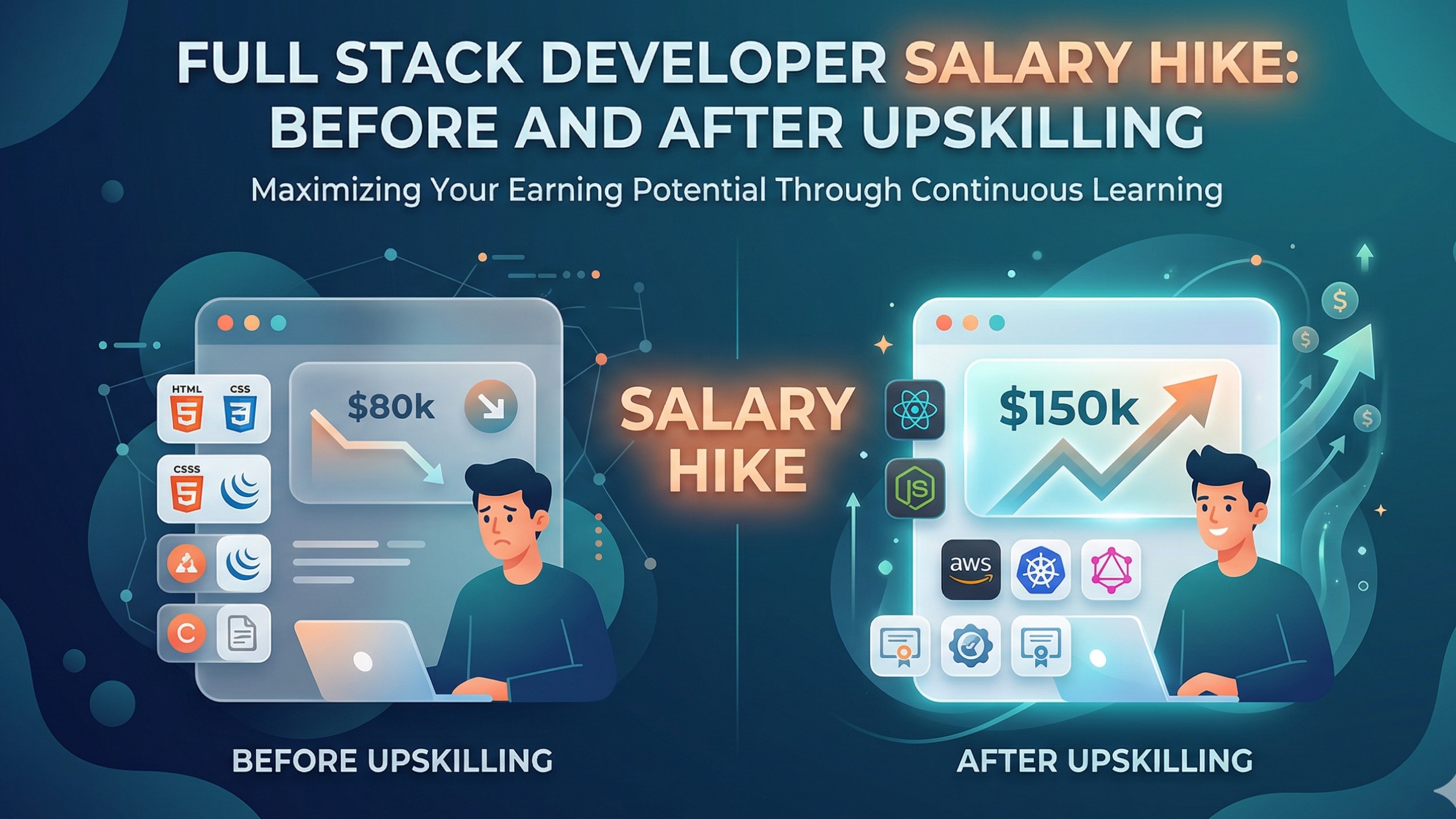
If you've received a 10% annual increment this year and felt quietly frustrated by it, you are not alone — and you are not wrong to want more. The full stack salary hike Mumbai market in 2025 is telling a story that most HR departments would rather you didn't see: while traditional single-stack developers and manual testers stagnate at incremental raises, Full Stack developers in Mumbai are negotiating 70% to 120% jumps when they switch roles. Not over five years. At the point of their next job change.
This post is for the QA engineer who has watched junior developers get hired at twice her salary. For the backend developer who knows React is something he should learn but hasn't started yet. For the fresher who is deciding whether to take the safe route or the accelerated one. The numbers in this post are real, the salary ranges are sourced from Mumbai's active 2025 job market, and the career profiles are composites of the kind of transformations that happen when someone decides to stop being a specialist in one skill and start being a builder of complete systems.
Let's look at what is actually happening to salaries in Mumbai's tech market right now — and what you can do about it.
The Salary Stagnation Reality: What's Happening to Single-Stack Roles in 2025
Mumbai's IT services sector has a well-known compensation pattern: join at a modest CTC, receive 8–12% annual increments, and wait 5–7 years for a meaningful jump. This pattern worked in an era when IT services was growing fast enough that any developer was valuable just by virtue of being available.
That era is over.
In 2025, three forces are compressing salaries for single-skill developers simultaneously:
Automation of routine tasks. AI-assisted coding tools like GitHub Copilot and Cursor are absorbing the low-complexity work that used to justify large junior and mid-junior headcounts. The developer who writes boilerplate code to specification is being squeezed. The developer who can design, build, and own a feature end-to-end is being competed for.
Oversupply at the entry level. India produces approximately 1.5 million engineering graduates per year, a significant portion of whom enter the tech market. Single-skill profiles — manual QA, junior frontend, or basic backend roles — are the most crowded segments of the market. High supply drives down negotiating leverage at exactly the moment when these professionals want their first significant raise.
Consolidation in IT services hiring. After the post-pandemic hiring surge and the subsequent correction, large IT services firms in Navi Mumbai's corridors are hiring more selectively, with stronger preference for candidates who can perform across multiple layers of the stack without extensive training investment.
The result is a growing gap between two groups of developers: those who are trapped in the increment cycle, and those who have made themselves genuinely rare by mastering the full picture.

Full Stack Salary Hike Mumbai: The Before and After
Let's be specific. Here is what the Mumbai market is paying across experience levels in 2025, comparing single-stack or traditional roles against Full Stack Developer profiles.
Fresher and Junior Level (0–2 Years)
Before — Single-skill / Traditional Role:
- Manual QA / Test Engineer: ₹2.8L – ₹4.5L
- Junior Frontend Developer (HTML/CSS/jQuery, basic React): ₹3.5L – ₹5L
- Junior Backend Developer (basic Java, limited Spring knowledge): ₹3.5L – ₹5.5L
- Data Entry / Business Analyst (non-technical): ₹2.5L – ₹4L
After — Entry Full Stack Developer (MERN or Java Spring Boot):
- MERN Stack Developer, Andheri/Powai startup: ₹6L – ₹9L
- Java Full Stack Developer, Navi Mumbai IT services: ₹6L – ₹8.5L
- Junior Full Stack Developer, BKC Fintech firm: ₹7L – ₹10L
The jump: 60% to 100%+ at point of entry, compared to peers who didn't upskill.
Mid-Level (2–5 Years)
Before — Single-skill professional transitioning:
- Manual QA with 3 years experience: ₹5L – ₹7L
- Frontend Developer (React only, no backend): ₹6L – ₹9L
- Backend Developer (Node.js or Java, no frontend ownership): ₹6L – ₹10L
- IT Support / Systems Admin pivoting to dev: ₹4L – ₹6L
After — Full Stack Developer, post-upskilling:
- MERN Stack Developer (React + Node.js + MongoDB), Mumbai startup: ₹10L – ₹18L
- Java Full Stack Developer (Spring Boot + React + AWS), Mumbai enterprise: ₹12L – ₹22L
- Full Stack Developer with Cloud skills (AWS/Azure certified): ₹15L – ₹28L
- Full Stack in Fintech (BKC, payments domain knowledge): ₹14L – ₹25L
The jump: 70% to 120%+ in the first post-upskilling role switch.
Senior Level (5+ Years)
Before — Senior in a single-skill track:
- Senior Manual QA / SDET: ₹10L – ₹14L
- Senior Frontend Developer: ₹14L – ₹20L
- Senior Backend Developer (Java/Node.js, no cloud or Full Stack ownership): ₹14L – ₹22L
After — Senior Full Stack Developer:
- Senior MERN Stack Developer, product company: ₹22L – ₹35L
- Senior Java Full Stack Developer, BKC banking tech: ₹25L – ₹40L
- Full Stack Tech Lead / Architect, Mumbai Fintech: ₹35L – ₹60L+
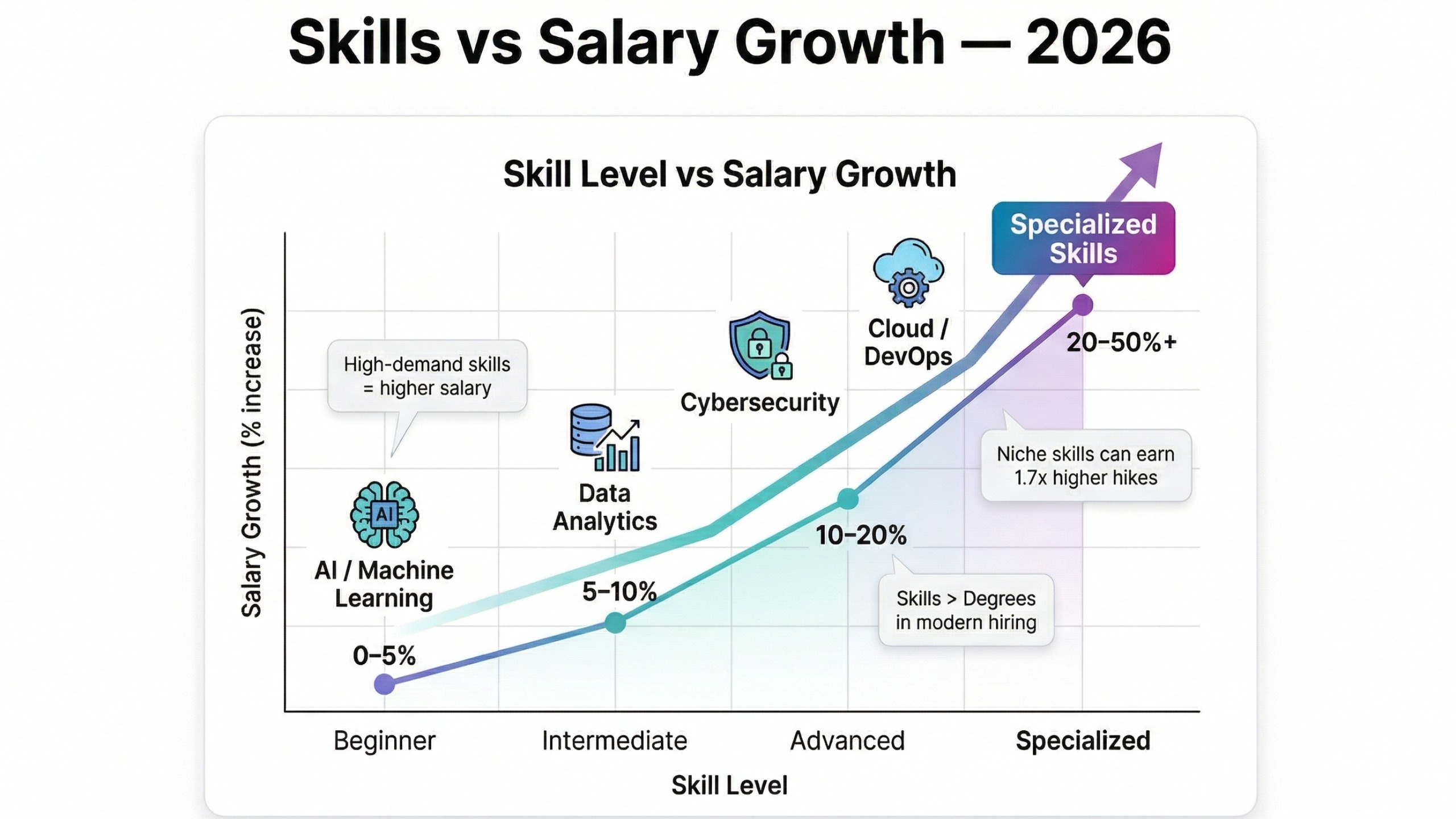
The long-term picture: The salary ceiling for a Senior Manual QA in Mumbai today is approximately ₹14–18L. The salary ceiling for a Senior Full Stack Developer or Tech Lead is ₹60L+. The gap compounds every year you delay the transition.
The High-Paying Hubs: Where Mumbai Pays the Full Stack Premium
Not all of Mumbai pays equally for Full Stack developers. Understanding the geographic and sector distribution of premium compensation helps you target your job search strategically.
BKC (Bandra Kurla Complex): The Premium Tier
BKC is where global financial institutions, Indian private banks, and their technology subsidiaries set up India operations. Companies like JP Morgan, Goldman Sachs, Deutsche Bank, SEBI, HDFC Securities, Kotak Mahindra, and Axis Bank's technology teams operate here.
These organisations pay a BKC premium for several reasons: the work is complex and compliance-heavy, the consequences of errors are measured in crores, and the talent competition is fierce. A Full Stack Developer at a BKC Fintech firm earns noticeably more than the same profile at a comparable company elsewhere in the city — the premium ranges from 15% to 30% above market rates for equivalent experience.
What BKC employers specifically pay for: Spring Boot + Spring Security expertise, payment system knowledge, microservices architecture experience, and the ability to communicate clearly about technical trade-offs to non-technical stakeholders (product managers, compliance officers, regulators).
Powai: The Product Company Premium
Powai's tech ecosystem, anchored by IIT Bombay and sustained by companies like Nykaa, Byju's tech teams, and dozens of funded SaaS startups, offers a different kind of premium: equity + competitive base salary for MERN Stack developers who can build and ship products at pace.
The Powai premium is less about job stability (startups are inherently less stable) and more about upside: stock options, early ownership of meaningful engineering problems, and a career acceleration that doesn't happen at the same speed in larger organisations. A Full Stack Developer at a Powai Series B startup earning ₹16L in base salary with meaningful ESOP could realise significantly more if the company grows or exits.
Lower Parel: The Agency and Scale-Up Market
Lower Parel's concentration of media companies, digital agencies, and consumer-facing businesses creates a consistent mid-market for Full Stack developers. Companies here build marketing platforms, e-commerce tools, and consumer applications — MERN Stack with React expertise is the dominant profile in demand.
Lower Parel pays slightly below BKC and Powai premium levels, but offers a high volume of roles and faster career progression at mid-size companies where Full Stack developers can quickly move into tech lead positions.
Navi Mumbai (Airoli, Mahape, Belapur): The Volume and Stability Market
India's largest IT services employers dominate Navi Mumbai. TCS, LTIMindtree, Capgemini, Persistent Systems, and Infosys employ Java Full Stack developers in the thousands here. The compensation is structured and predictable — slightly below the startup premium but with significantly higher job security, structured appraisal cycles, and access to international projects.
For a developer building their first 2–3 years of professional experience on Java Spring Boot, Navi Mumbai's IT corridor offers an excellent foundation: real production systems, mentorship from senior developers, and a clear path to the BKC premium market once the experience and skills are developed.
The Four Factors That Drive the Salary Hike
Understanding why Full Stack developers earn more is as important as knowing how much they earn — because it tells you exactly which skills to prioritise.
Factor 1: Cloud Mastery (AWS / Azure)
The single largest individual salary multiplier in 2025 is cloud proficiency. A Full Stack developer who can build an application and deploy, monitor, and scale it on AWS or Azure is performing work that previously required two people: a developer and a DevOps engineer.
Mumbai's market currently pays a 20–35% premium for Full Stack developers with demonstrated cloud skills over those without. An AWS Solutions Architect Associate certification, combined with practical experience deploying a Spring Boot or Node.js application to AWS (ECS, RDS, ElastiCache, CloudWatch), is the fastest individual credential improvement you can make.
The business case is simple: companies — especially mid-size startups and Fintechs — want engineers who own the full lifecycle of a feature, from code to production. Cloud skills complete that lifecycle.
Factor 2: Transitioning From "Coder" to "Problem Solver"
There is a salary ceiling that applies to developers who write code to specification and a different, much higher ceiling that applies to developers who understand the business problem well enough to challenge, refine, and improve the specification.
Mumbai's best-paying roles — the ₹20L+ positions at Fintech companies and product startups — are not hiring for typing speed or framework fluency. They are hiring for judgment. The ability to look at a feature request and say: "This approach will create a scaling problem in six months — here's an alternative that achieves the same goal without that trade-off." That is not a skills question. It is a maturity question — and it is developed through working on real projects, making real mistakes, and developing genuine system thinking.
This is why portfolio projects and hands-on work matter more than certifications. A developer who has built and deployed a payment system — even as a portfolio project — has confronted real problems: transaction atomicity, idempotency, webhook reliability, failure recovery. Those confrontations build the problem-solving instinct that commands premium compensation.
Factor 3: Communication and Cross-Functional Ownership
Mumbai's Fintech and banking sector is distinguished from other tech markets by one feature: developers work directly with compliance, risk, finance, and product teams on a regular basis. A developer who can explain a technical constraint to a non-technical compliance officer, write a clear technical specification from a business requirement, and document a system for a regulatory audit is worth substantially more than one who can only communicate in code.
This is the underrated differentiator. Senior technical interviews at BKC firms almost always include a "translate this business problem into a technical solution" exercise. Developers who have practiced this — through structured mentorship, real project experience, or mock interview preparation — consistently out-negotiate those who haven't.
Factor 4: The Mumbai Fintech Bonus — Why This City Pays More
Mumbai's Fintech premium is real and documented. Full Stack developers in Mumbai earn 15–25% more than equivalent profiles in Bengaluru for Fintech-specific roles, and 25–40% more than equivalent profiles in Hyderabad or Pune. The reasons are structural:
The cost of talent in Mumbai is higher, and companies adjust their compensation to match — but the premium exceeds the pure cost-of-living adjustment, reflecting genuine scarcity of skilled Full Stack developers who understand financial domain logic.
The complexity premium: A Full Stack developer at a BNPL (Buy Now Pay Later) startup or a wealth management platform is not just building CRUD features. They're building systems that touch real money, navigate regulatory requirements, and must be correct under adversarial conditions. This complexity commands and justifies higher compensation.
The NPCI effect: India's payments infrastructure — UPI, IMPS, FASTag, RuPay — is headquartered in Mumbai and creates a permanent, government-backed source of demand for financial software development talent. This acts as a floor under Mumbai's Fintech salaries that doesn't exist in other cities.
Real-World Profiles: What the Hike Actually Looks Like
These profiles are composites representing common transitions that Mumbai's tech market makes possible.
Profile 1: Meet Rahul — From Manual Tester to Full Stack Developer (100% Hike)
Background: Rahul, 26, from Thane. BSc Computer Science from a Navi Mumbai college. Joined a small IT services company in Airoli as a Manual QA Engineer. Three years later, his CTC was ₹4.8L. His annual increments had been 10%, 8%, and 9%. He was writing test cases for a Spring Boot API he didn't fully understand.
The trigger: A junior Full Stack developer joined Rahul's team — fresh out of a coding bootcamp, no work experience — and was offered ₹7.2L. The gap was a wake-up call.
What Rahul did: Over nine months, while continuing to work, Rahul completed a structured Java Full Stack program. He already understood the QA side of APIs deeply — he could read Postman requests, understand HTTP status codes, and recognise common API bugs. He channelled that understanding into learning Spring Boot, then Spring Security, then React. He built a Banking API project that mirrored the kind of application he'd been testing for three years.
The outcome: Rahul applied for Full Stack Developer roles in Navi Mumbai's IT corridor and at two Fintech startups in BKC. He received three offers. He accepted a role at a financial services technology company in BKC at ₹9.6L — a 100% hike on his previous CTC, and significantly above what a typical manual QA-to-developer transition achieves without the structured upskilling.
The key insight: Rahul's QA background wasn't a handicap — it was an advantage. He understood how to test his own code, how to think about edge cases, and how to communicate defects clearly. The Full Stack skills turned that foundation into a premium profile.
Profile 2: Meet Priya — From Frontend-Only to Full Stack (80% Hike)
Background: Priya, 28, from Andheri. BCA from Mumbai University. Four years of experience as a React developer at a digital agency in Lower Parel. CTC: ₹7L. She was good at her job — clean components, strong CSS skills, solid React knowledge. But she had never touched a backend, never worked with a database, and her job applications to product companies kept stalling at the "tell me about your backend experience" question.
The trigger: Priya was passed over for a Senior Developer role at a Powai SaaS company in favour of a candidate with less polished React skills but end-to-end Node.js experience. The feedback from the interviewer: "We need someone who can own a feature, not just the frontend half of it."
What Priya did: Priya already had the hardest part — a strong React foundation. She needed the backend. Over six months, she focused on Node.js, Express, PostgreSQL, and AWS deployment. She built a SaaS expense management tool with a React frontend, a Node.js API, PostgreSQL database, JWT authentication, and a live deployment on AWS. She documented the challenges she faced — specifically around cross-origin authentication and database connection pooling — in her README.
The outcome: Priya received a Full Stack Developer offer from a Powai-based SaaS startup at ₹12.5L — an 80% hike. Eighteen months later, after delivering two major product features end-to-end, she was promoted to Senior Full Stack Developer at ₹18L.
The key insight: Priya didn't need to become a backend expert — she needed to be credibly competent. A working, deployed, documented project proved that she could own a full feature. That was enough to break the ceiling.
Profile 3: Meet Sameer — From Backend Dev to Cloud-Enabled Full Stack (75% Hike + Switch to Product)
Background: Sameer, 31, from Borivali. BE Computer Engineering from a Mumbai college. Six years of Java backend experience at an IT services company in Mahape. CTC: ₹13L. He was technically solid — strong Spring Boot, good with SQL, comfortable with microservices concepts. But he had never worked on a React frontend, had no cloud experience, and his career was tracking toward a "Senior Backend Developer" plateau at ₹18–20L.
The trigger: Sameer was offered ₹15L by a competitor IT services firm — a 15% jump. But he'd been researching the market and knew Full Stack developers at BKC Fintech companies with similar Java experience were earning ₹25L+. The 15% offer felt like a consolation prize.
What Sameer did: Sameer spent four months on targeted upskilling — React fundamentals (he didn't need to go deep, just production-competent), AWS (he pursued the Solutions Architect Associate certification), and built a microservices-based stock portfolio tracker that combined a React dashboard with his existing Spring Boot expertise, deployed on AWS ECS with RDS and ElastiCache.
The outcome: Sameer applied for Senior Full Stack Developer roles at BKC-based banking technology firms. He received an offer at ₹22.8L from a securities technology company — a 75% hike on his previous CTC. His Spring Boot expertise was already valued; the React and AWS additions were what unlocked the new compensation tier.
The key insight: Sameer's backend depth was a moat, not a ceiling. The Full Stack additions didn't replace his Java expertise — they multiplied it. A strong backend developer who adds credible frontend and cloud skills doesn't become an average Full Stack developer; they become a senior Full Stack developer with above-average backend depth.
The Compounding Effect: Why Timing Matters
One year from now, you will either have made this transition or you won't have. The developer who begins upskilling in March 2025 and completes it by December 2025 will apply for roles in a market that is actively hiring, with a portfolio that demonstrates 2025-relevant skills, and will negotiate their salary from a position of demonstrated competence.
The developer who waits another year will begin from the same starting point — but the market will have moved. More developers will have made the transition. The supply of Full Stack developers will have increased. The premium will still exist, but the window for the largest jumps always belongs to those who move early.
The full stack salary hike Mumbai market is not going to close — the structural demand in Fintech and enterprise tech is durable. But the steepest part of the opportunity curve belongs to 2025.
Don't Settle for a 10% Hike.
Your next increment is already decided — probably somewhere between 8% and 12%, assuming your manager likes you and the company had a decent year.
Your next job offer is not decided yet. That is still entirely in your control.
TechPaathshala is offering free one-on-one salary growth consultations with our career experts — developers who know Mumbai's tech hiring market, who have placed students in roles across BKC, Powai, and Navi Mumbai, and who can look at your current profile and give you a concrete, realistic estimate of what you could be earning 12 months from now if you make the right moves today.
In your free session, you'll get:
- A personalised assessment of your current market value vs. your potential market value as a Full Stack developer
- A clear upskilling plan — what to learn, in what order, in what timeline — based on your existing skills and your target companies
- Honest feedback on whether your current portfolio and GitHub profile would pass the screening round at your target organisations
- Salary negotiation anchors — what Mumbai's market is actually paying for your target role, so you never leave money on the table
This is not a sales call. It is a career planning conversation with someone who has the market data to make it useful.
👉 Calculate your potential salary growth with a TechPaathshala expert today — Don't settle for a 10% hike when the market is offering 70% to 120% to developers who make the right move.
TechPaathshala is a Mumbai-based tech education and career acceleration platform. Our placement alumni are working as Full Stack Developers across Mumbai's top Fintech companies, product startups, and enterprise IT firms.

You Might Also Like